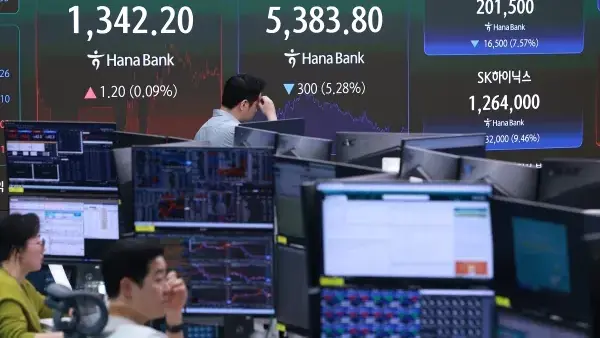
South Korea’s deficit-financed government debt is on track to exceed 1,300 trillion won (about US$963 billion) by 2030, according to the country’s next budget proposal — a milestone that puts renewed pressure on fiscal policy just as the government is weighing massive spending commitments linked to Big Tech investment and the AI buildout.
What happened
The Ministry of Planning and Budget (Korea’s equivalent of a finance and budget ministry combined) released its budget proposal for the coming fiscal year, which includes projections showing that deficit debt (채무, the portion of national debt that must eventually be repaid through tax revenue, as opposed to debt backed by financial assets or revenue-generating public enterprises) will surpass 1,300 trillion won — roughly US$963 billion — by 2030. This is the debt that falls directly on taxpayers, not the broader gross debt figure that includes self-liquidating obligations. The projection represents a significant acceleration from current levels and reflects sustained structural deficits in the government’s fiscal accounts.
Why Korea does it this way
Korea distinguishes between “managed fiscal balance” debt and raw gross debt, a practice rooted in its post-1997 IMF crisis fiscal framework, which was designed to give a clearer picture of which liabilities ultimately require taxpayer funding. The Ministry of Planning and Budget (Gihoekjaejongbu) consolidates budget and planning functions — unusual by OECD standards — giving it wide influence over both revenue forecasts and spending ceilings. Korea’s population is aging faster than almost any other developed economy, which structurally widens the gap between welfare spending and tax receipts each year. At the same time, large state-backed infrastructure commitments — including subsidies and grid investments tied to semiconductor fabs and data centers — are increasingly counted within the budget envelope.
What it means for you
Taxpayers and workers: A rising deficit debt trajectory typically leads to future pressure on corporate and income taxes, or cuts to discretionary spending. Korea’s fiscal rules are not yet legally binding in the way the EU’s Stability Pact is, so the 2030 target is a projection, not a hard ceiling — but it influences budget negotiations every autumn.
Foreign residents and expats: Fiscal expansion tends to support the Korean won (KRW) in the short term through higher domestic demand, but a deteriorating structural balance can weigh on the currency over the medium term, affecting remittances and cost-of-living calculations in dollar or euro terms.
Investors — Big Tech and infrastructure angle: Korea’s chaebol (large family-controlled conglomerates) — including Samsung, SK, and Hyundai — have announced multi-trillion-won domestic investment pledges in semiconductors, AI data centers, and power infrastructure. These plans partly depend on government co-investment and grid capacity. A tightening fiscal envelope could slow the pace of public subsidy and grid buildout that underpins those timelines. Investors tracking KOSPI-listed utilities and construction firms should note that power demand projections tied to data center growth are a key variable in government capex planning — but many announced timelines have historically stretched by 12–24 months.
Nothing is decided yet on specific spending cuts or tax rises; those would require National Assembly (Korea’s single-chamber parliament) approval.
Watch next
- National Assembly budget review season (Oct–Dec 2026): The legislature must pass a final budget by December 2; committee hearings will reveal which line items face cuts.
- Korea’s mid-year fiscal outlook release: The Ministry of Planning and Budget typically publishes a revised fiscal trajectory in September — watch for any upward revision to the 2030 deficit debt figure.
- Credit rating reviews: Moody’s and S&P conduct annual Korea sovereign reviews, usually in Q4; a worsening debt path could shift their outlooks.
Source: KBS World Radio
Was this useful?
What made the difference? Pick one.
What made the difference? Pick one.
Thanks. We read every answer.