The Bank of Korea (BOK) warned on October 27, 2026, that Korea’s semiconductor- and AI-driven growth model is eroding the quality of jobs available to young workers, even as headline GDP expands.
What happened
In a report released Monday, October 27, 2026, the Bank of Korea (BOK — Korea’s central bank, roughly equivalent to the U.S. Federal Reserve) said the quality of youth employment is deteriorating because the country’s economic growth is increasingly concentrated in two capital-intensive sectors: semiconductors and artificial intelligence. The BOK noted that these sectors generate high output and export value but require relatively few workers compared to their economic weight, and that the workers they do hire tend to be experienced specialists rather than new graduates. The report did not specify new numeric thresholds; for current figures on youth unemployment rates and policy targets, check the BOK’s Employment Situation releases at bok.or.kr.
Why Korea does it this way
Korea deliberately built an export-led, conglomerate-driven (chaebol — large family-controlled industrial groups such as Samsung and SK) industrial structure from the 1960s onward. Semiconductors became the single largest export category, now routinely accounting for a large share of total merchandise exports. This concentration made the macro economy highly responsive to chip-cycle upswings but also means that when chips boom, the gains flow mainly to capital owners and a narrow band of skilled engineers rather than spreading across the labor market. AI adoption, layered on top, is now accelerating the automation of the entry-level white-collar tasks that new graduates have traditionally filled first.
What it means for you
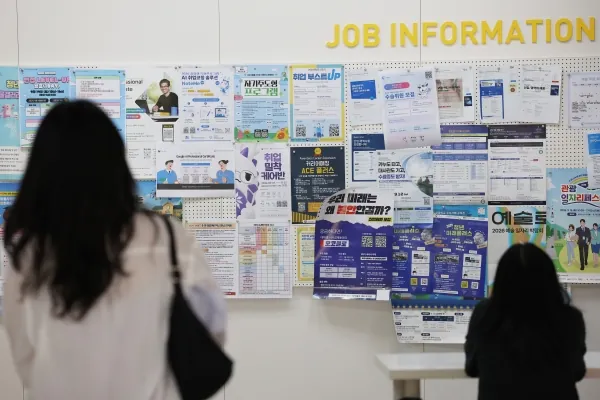
Young job-seekers: The BOK’s concern is structural, not cyclical — a strong GDP print does not automatically translate into more openings for first-time workers. Graduates entering fields where AI handles routine tasks (document review, basic coding, data entry) face a thinner entry-level market. Specific sector data was not released in the excerpts available; check the BOK report directly for affected occupational categories.
Foreign residents working in Korea: Most salaried foreign workers pay into the goyong boheom (Employment Insurance — Korea’s unified system that covers both unemployment benefits and parental-leave pay). A weaker youth-hiring market can tighten the overall insurance fund’s contribution base over time, though no immediate change to benefit rates was announced.
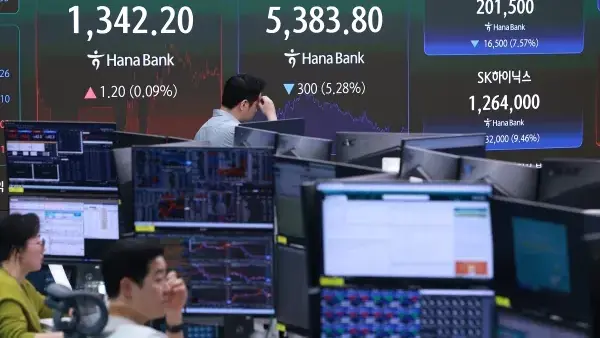
Investors in Korean equities: Korea’s KOSPI index has heavy weight in semiconductor names (Samsung Electronics and SK Hynix together represent a large share of index market cap). The BOK report signals that policymakers view the current growth mix as socially unsustainable, raising the possibility of future fiscal or industrial-policy intervention aimed at broadening the job base — a factor to watch in budget cycles. No specific policy action was announced in this report.
Employers and HR teams: The BOK framing suggests regulatory or incentive pressure on companies to hire and train junior staff could become part of future economic packages, though no date or mechanism was specified in the report.
Watch next
- BOK next Monetary Policy Board meeting (date to be confirmed on bok.or.kr): If the board cites deteriorating youth employment quality alongside inflation data, it signals a shift toward growth-supportive policy — watch for that language in the statement.
- Statistics Korea (KOSTAT) monthly Labor Force Survey: Released around the 13th of each month; the November release (on or around November 13, 2026) will be the first dataset that can be checked against the BOK’s warning for youth employment rate and quality indicators.
- Korea’s 2027 budget proposal: The government submits its draft budget to the National Assembly by September each year, with final passage due by December 2, 2026 — watch for any youth employment or re-skilling line items added in response to the BOK report.
FAQ
Is Korea’s youth unemployment getting worse because of AI?
The Bank of Korea says yes, in part — its October 2026 report identifies AI adoption as one of the forces reducing entry-level job opportunities for young workers, alongside the economy’s heavy dependence on capital-intensive semiconductor production. The exact magnitude was not specified in the publicly available summary; the full BOK report will carry the figures.
Does Korea’s Employment Insurance cover foreign workers for unemployment benefits?
Most salaried foreign workers in Korea do pay into the Employment Insurance (goyong boheom) system and are generally eligible for unemployment benefits under the same rules as Korean nationals, though visa-category restrictions apply — check eligibility with the Korea Employment Information Service (KEIS) or your employer’s HR team for your specific visa type.
Source: KBS World Radio
Was this useful?
What made the difference? Pick one.
What made the difference? Pick one.
Thanks. We read every answer.