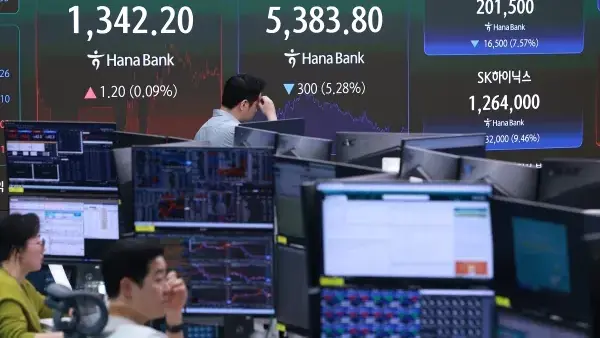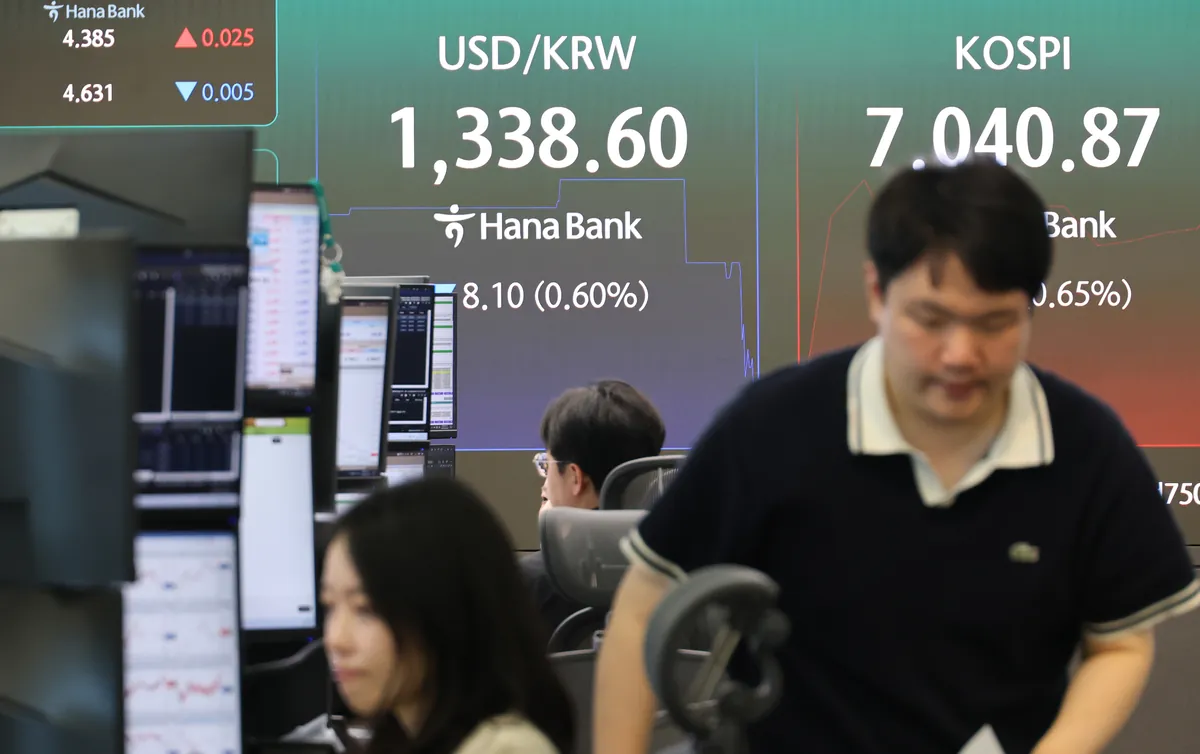
South Korea’s benchmark stock index reclaimed the psychologically important 7,000 level on September 8, 2026, for the first time in 15 trading days, lifted by fresh AI-driven demand expectations for the country’s dominant chipmakers.
What happened
The KOSPI (Korea Composite Stock Price Index, the main stock market index for companies listed on the Korea Exchange in Seoul) opened at 7,045.79 on the morning of September 8 — up 50.40 points, or 0.72%, from the prior close — and briefly touched 7,051.34 intraday. The index had last traded above 7,000 on August 18. It had closed the previous day at 6,995.39, itself a gain of 4.61 points. The secondary KOSDAQ (Korea Securities Dealers Automated Quotations, a tech-heavy smaller-cap market similar to the US Nasdaq) also rose, opening at 825.03, up 0.35%.
The rally was led by the two companies that together define South Korea’s place in global technology. Samsung Electronics gained 0.9%, trading at around 272,500 won (roughly $204), a day after surging 5.68%. SK hynix — the world’s leading producer of high-bandwidth memory chips used in AI accelerators — jumped 2.8% to around 1,834,000 won (roughly $1,375), following an 8.26% rise the session before.
Why Korea does it this way
South Korea’s economy is unusually concentrated in semiconductors: chips account for roughly a fifth of the country’s total exports, and Samsung Electronics and SK hynix together represent a large share of the KOSPI’s total market capitalisation (the combined value of all listed shares). That means global AI investment cycles translate almost directly into Korean stock market moves. When a major AI platform signals higher memory demand, Korean chip stocks — and by extension the whole index — tend to move sharply. This dynamic has made the KOSPI one of the world’s most AI-sentiment-sensitive indices.
The 7,000 level carries symbolic weight because the KOSPI crossed it for the first time in its history only in 2021, during the post-pandemic technology rally; breaking back above it after a correction signals renewed investor confidence.
What it means for you
Investors: The immediate catalyst was market speculation that OpenAI’s upcoming AI model, reported under the name “Astra,” will require significantly more semiconductor memory, directly benefiting SK hynix (listed on the Korea Exchange: ticker 000660) and Samsung Electronics (ticker 005930). Both stocks carry substantial weight in the KOSPI index and in Korea-tracking ETFs (exchange-traded funds). Investors in those vehicles will see this rally reflected in fund values. No investment advice is implied here — individual stock and fund decisions carry their own risks.
Korea-watchers and residents: A rising KOSPI tends to support consumer confidence and, over time, corporate hiring and bonus cycles, particularly in the semiconductor industry, which employs tens of thousands of workers in cities such as Suwon, Icheon, and Cheongju. A sustained recovery above 7,000 would also reduce pressure on the Korean won (KRW), which typically weakens when the index falls, since foreign investors sell Korean assets and repatriate funds. A stronger won matters directly to foreign residents and expats, who convert salaries or remittances at the exchange rate.
Energy and utilities: Korea imports nearly all of its oil and gas. A firmer won — supported by a rising KOSPI attracting foreign capital — moderates the cost of those imports, which the government uses as a lever when setting fuel taxes (the government periodically reduces fuel duties to cap pump prices) and utility tariffs. If the won stabilises or appreciates, some downward pressure on electricity and gas bills is possible, though the government’s tariff schedule is set separately and any change would require a formal adjustment.
Watch next
- OpenAI’s official announcement or release timeline for the “Astra” model — confirmation or denial will directly test whether the rally’s premise holds.
- SK hynix’s next earnings guidance and any supply contract updates, which will indicate whether AI memory orders are translating into real revenue.
- The Bank of Korea’s (BOK) next monetary policy meeting, where a sustained KOSPI recovery and won stability could influence the rate-cut debate.
Source: Kyunghyang Shinmun (Khan.co.kr)
Was this useful?
What made the difference? Pick one.
What made the difference? Pick one.
Thanks. We read every answer.