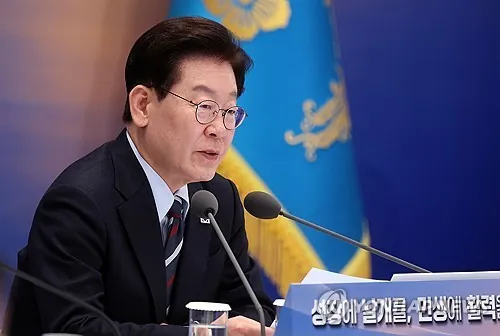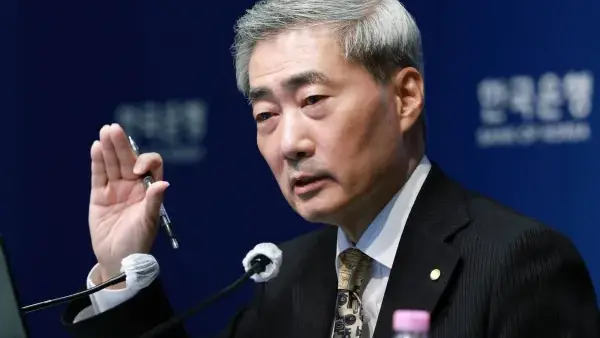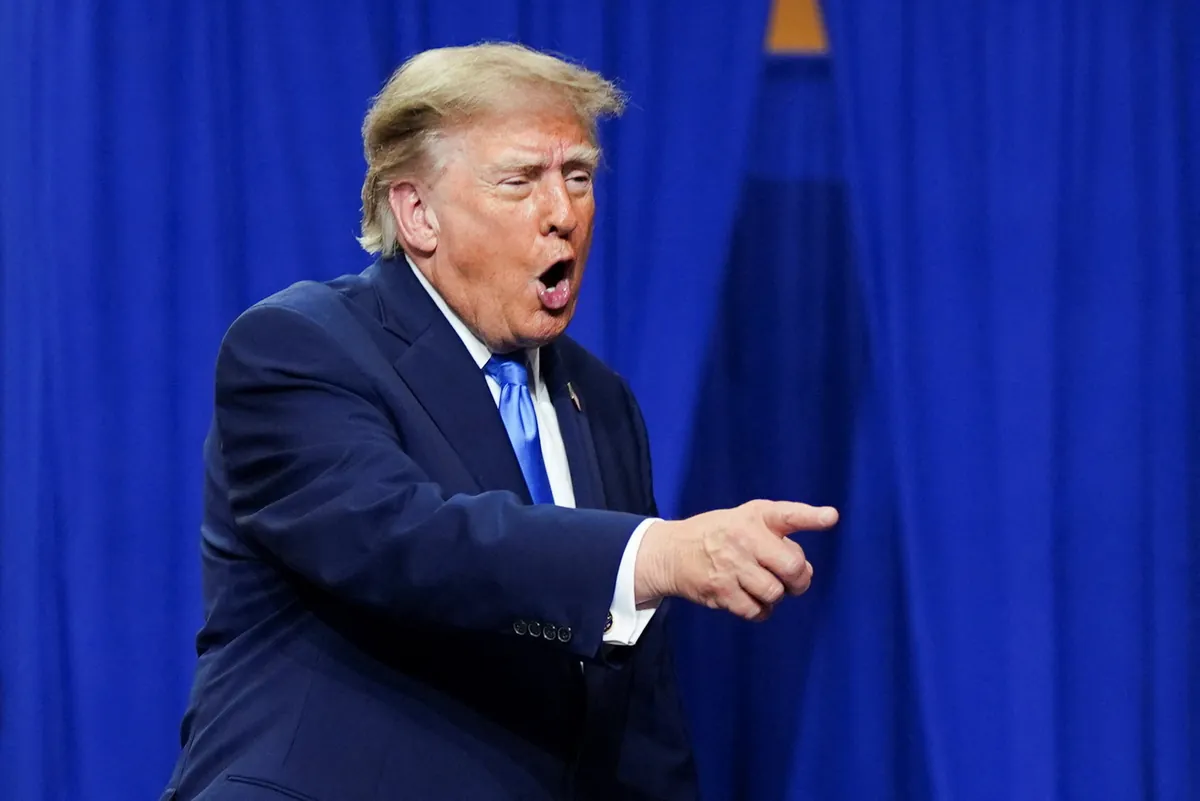
U.S. President Donald Trump threatened on October 2 to potentially double Korea’s tariff burden if Seoul does not agree to participate in the Alaska liquefied natural gas (LNG) project — a deal that, in official documents, has only reached the “review initiated” stage, not a signed commitment.
What happened
Speaking to reporters at the White House on October 2 (local time), Trump told reporters that if Korea does not “soon agree” on Alaska LNG development, he would raise the burden to “double.” He did not specify what baseline he meant by double, but foreign media and analysts widely interpret the remark as a threat to raise tariffs. Trump also claimed Korea had committed $8.4 billion (approximately 11.33 trillion Korean won, KRW) to enhanced oil recovery (EOR — a technique that injects carbon dioxide or other substances into aging oil fields to boost output) projects. Korean officials say EOR is not part of any signed agreement; some analysts suggest Trump may have confused it with carbon capture, utilization, and storage (CCUS) projects that Korea had listed as potential investment candidates.
The backdrop is a framework agreement reached in 2025 under which the U.S. agreed to reduce its reciprocal tariff (a tit-for-tat import duty set to mirror what the U.S. sees as Korea’s trade barriers) on Korean goods from 25% down to 15%, in exchange for Korea pledging $200 billion in U.S. strategic-sector investments and $150 billion in shipbuilding commitments. Separately, the U.S. has already applied a 12.5% “forced labor tariff” under Section 301 of the U.S. Trade Act. The Korean government insists the combined tariff load “would not exceed 15%.” If Trump’s threatened doubling were applied to that 15% baseline, the effective rate could return toward 25% — erasing the core gain of the entire negotiation.
Why Korea does it this way
Exports account for roughly 40% of Korea’s GDP, making the country acutely sensitive to U.S. tariff policy. When Washington raised duties in 2025, Seoul chose to negotiate a large-scale investment pledge — rather than retaliate — to secure a lower tariff ceiling. LNG and energy deals are strategically attractive to U.S. negotiators because they generate domestic American jobs and tax revenue; Korea has historically imported significant volumes of U.S. LNG, making participation in upstream projects a plausible quid pro quo. However, Korean energy companies and state funds cannot commit to a multi-decade infrastructure project on a presidential off-the-cuff remark — formal investment decisions require board approvals and government budget processes.
What it means for you
Exporters and manufacturers: If tariffs climb back toward 25%, Korean manufacturers — particularly in autos, electronics, and steel — face higher costs selling into the U.S. market. That pressure typically passes downstream to suppliers and workers. The current 15% deal is the floor protecting margins; watch whether it holds.
Investors in Korean-listed companies: The KOSPI (Korea Composite Stock Price Index, the benchmark for Seoul’s main stock exchange) is sensitive to tariff headlines. Companies with heavy U.S. export exposure — check index weight data at the Korea Exchange (KRX) for current constituents — are the most directly exposed. No specific contracts or order announcements were made in this story.
Energy sector: Korean state energy firms and large conglomerates (chaebols — family-controlled industrial conglomerates that dominate Korea’s corporate landscape) may face political pressure to join the Alaska LNG project ahead of a formal feasibility review. Participation decisions would involve KOGAS (Korea Gas Corporation), a listed state-run utility.
Foreign residents and workers: A sustained tariff escalation that slows export-led growth could weaken the Korean won (KRW) against the dollar, raising the cost of dollar-denominated imports and remittances. No immediate rate or price changes have been announced.
Watch next
- Korea’s Ministry of Trade, Industry and Energy (MOTIE) has said it is “closely monitoring” the situation — watch for an official statement or ministerial press briefing; no date is set, but one is typically scheduled within days of a major U.S. tariff statement.
- The next U.S.-Korea trade working-level meeting: no date confirmed as of October 4, 2026 — the trigger to watch is any White House or MOTIE announcement of a scheduled round of invest-in-the-U.S. talks.
- If the combined effective tariff rate on Korean goods is officially recalculated above 15%, that numeric breach of the 2025 framework would be a formal escalation signal — check MOTIE’s trade statistics portal and the U.S. USTR (Office of the United States Trade Representative) for published rate schedules.
FAQ
What is the current tariff rate on Korean exports to the U.S.?
Under the 2025 framework agreement, the U.S. reduced its reciprocal tariff from 25% to 15% on Korean goods; a separate 12.5% forced-labor tariff under Section 301 is also applied, and the Korean government says the combined burden “would not exceed 15%.” The exact blended rate by product category is not specified in this article — check current schedules at the USTR website.
Has Korea officially agreed to join the Alaska LNG project?
No. As of October 4, 2026, official documents place the Alaska LNG project at the “review initiated” stage only — no signed commitment has been made by the Korean government or Korean companies, despite President Trump’s public statements to the contrary.
Source: The Kyunghyang Shinmun (경향신문)
Was this useful?
What made the difference? Pick one.
What made the difference? Pick one.
Thanks. We read every answer.