South Korea has formally notified the International Atomic Energy Agency (IAEA) that it intends to enter consultations over a special safeguards arrangement covering nuclear-powered submarines — a procedural step that could define how the country accounts for enriched uranium used in military reactors without triggering standard civilian inspection rules.
What happened
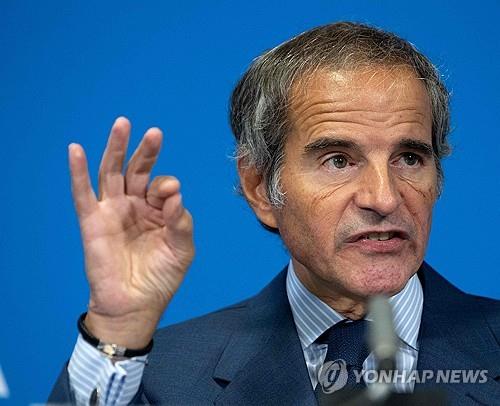
The IAEA confirmed on 8 September 2026 that South Korea had submitted formal notification of its intent to consult on a safeguards arrangement for nuclear-powered submarines. Under the NPT (Nuclear Non-Proliferation Treaty) framework, non-nuclear-weapon states that want to operate naval reactors fueled by highly enriched or low-enriched uranium must negotiate a special “Naval Nuclear Propulsion” arrangement with the IAEA to exempt that fuel from routine civilian safeguards inspections — while still demonstrating the material is not being diverted to weapons. The notification is the opening procedural move; actual negotiations and any agreement have not yet begun. South Korea is the first non-nuclear-weapon state in Northeast Asia to formally pursue this path.
Why Korea does it this way
South Korea has been developing nuclear-powered submarine (SSN) capabilities as part of a broader defense modernization drive, with the goal of giving its navy longer-range, stealthier underwater deterrence against North Korea’s own growing submarine fleet. Seoul has operated conventional diesel-electric submarines for decades but sees nuclear propulsion as a strategic upgrade. The NPT allows non-nuclear states to use enriched uranium for naval reactors, but the rules for keeping that fuel out of IAEA routine monitoring are complex — the country must reach a bilateral “arrangement” with the agency that satisfies both military secrecy and non-proliferation accounting. The IAEA has previously worked through this process with countries such as Australia under the AUKUS (a trilateral security pact between Australia, the United Kingdom, and the United States) agreement, making that negotiation a reference point for Seoul.
What it means for you
Investors: The notification puts a spotlight on South Korea’s domestic nuclear industrial base. KEPCO (Korea Electric Power Corporation, the state-owned utility that also has nuclear engineering subsidiaries) and defense-linked firms involved in naval propulsion research stand to benefit from expanded government nuclear spending. The Korea Atomic Energy Research Institute (KAERI) is the primary public research body for reactor design. No contracts have been disclosed and no enrichment infrastructure commitment has been announced at this stage.
Energy & power grid: South Korea’s civilian nuclear fleet already supplies roughly 30% of national electricity. Any expansion of enrichment or fuel-fabrication capacity for naval use would intersect with the same industrial base that KEPCO and the government lean on to relieve grid congestion — particularly around the Seoul Capital Area (Sudogwon), where data centers, semiconductor fabs, and residential demand are competing for limited transmission capacity. Naval nuclear work does not directly add megawatts to the grid, but it deepens state commitment to a nuclear supply chain that underpins long-term power planning.
Foreign residents and Korea-watchers: This is a geopolitical and diplomatic story more than an immediate household story. No changes to electricity tariffs, trade rules, or daily life follow directly from this notification. Watch for how China and North Korea respond — both have historically objected to any expansion of South Korea’s nuclear capabilities, even for non-weapons purposes.
Watch next
- IAEA response: whether the agency formally accepts the consultation request and sets a timeline — typically announced within weeks of notification.
- National Assembly (South Korea’s parliament) budget cycle: defense and nuclear R&D appropriations for fiscal year 2027 are debated in autumn 2026 and will signal how much funding backs this ambition.
- AUKUS precedent: progress in Australia’s own IAEA naval-safeguards negotiation serves as the closest public template; any framework agreed there is likely to shape Seoul’s talks.
Source: Yonhap News Agency (English)
Was this useful?
What made the difference? Pick one.
What made the difference? Pick one.
Thanks. We read every answer.