South Korea’s government has extended its fuel tax cuts through the end of November 2026, as persistently high global oil prices — driven by Middle East conflict disrupting key shipping routes — keep pressure on household energy costs.
What happened
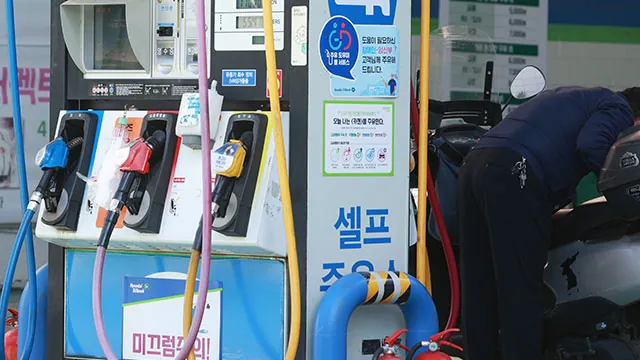
Seoul announced that existing fuel tax reductions (temporary cuts to the traffic energy environment tax, Korea’s main fuel excise levy) will remain in place through November 2026. The extension comes as crude oil prices have climbed due to conflict in the Middle East that has blocked critical shipping lanes, raising import costs for a country that buys virtually all of its energy abroad. Alongside the tax extension, the government said highway rest-stop petrol stations (gosoktoro hwugesoseo jubuyso) — which are state-affiliated and typically cheaper than urban forecourts — will be required to lower pump prices during the Chuseok (Korean harvest holiday, equivalent to Thanksgiving) travel period beginning this week.
Why Korea does it this way
Korea imports close to 100% of its crude oil, so global price spikes translate almost directly into domestic fuel and utility bills with very little domestic buffer. The government has used temporary fuel tax cut authority — a tool available under Korean law that lets the Ministry of Economy and Finance reduce excise rates by decree for up to six-month rolling periods — repeatedly since oil markets became volatile in 2021. Keeping pump prices in check also matters for headline CPI (consumer price index, the main inflation gauge), because fuel feeds into transport, logistics and food delivery costs across the economy. The highway station price directive leverages the fact that those outlets are managed by Korea Expressway Corporation, a state-run entity, giving the government direct pricing leverage it does not have over private urban stations.
What it means for you
Drivers and commuters: Pump prices will stay lower than they would be without the cuts through at least end-November 2026. If you are driving over the Chuseok holiday period (mid-to-late September 2026), highway stations will offer further discounts — fill up on the expressway rather than in the city if cost is a concern.
Households and renters: Fuel tax cuts compress the transport component of CPI, which in turn reduces upward pressure on utility tariffs that are partly indexed to inflation. The direct savings per tank depend on cut depth — check the current rates at the Ministry of Economy and Finance (MOEF), as the article does not state the specific percentage.
Businesses with logistics costs: Lower diesel pump prices reduce delivery and freight costs in the near term, providing a partial offset to any won weakness that makes imported goods more expensive.
Foreign residents: If you drive, you benefit directly. If you rely on public transport, indirect effects — lower bus and taxi operating costs — may moderate fare increases, though any pass-through takes several months.
Investors: Refining-margin and oil-retail stocks listed on the Korea Exchange (KRX) face modest near-term pressure from capped domestic pump prices, while oil importers and logistics companies get a cost tailwind. Check the current index weights and individual company exposure at the KRX or your broker’s Korean equity research.
Watch next
- End-November 2026 deadline: The government must decide before December 1, 2026 whether to let the cuts expire, extend again, or phase them out — watch for a MOEF budget or tax-policy announcement in late October or November 2026.
- October 2026 CPI release: Statistics Korea publishes monthly CPI data in the first week of the following month; if the October print shows fuel-driven inflation re-accelerating above recent trend, pressure for a further extension will build. The release date will be announced on the Statistics Korea website.
- Middle East shipping routes: If the Strait of Hormuz or Red Sea lanes reopen and Brent crude falls back to prior levels, the rationale for the cut weakens and an early rollback becomes more likely — track Brent spot prices against any diplomatic developments.
Source: KBS World Radio
Was this useful?
What made the difference? Pick one.
What made the difference? Pick one.
Thanks. We read every answer.