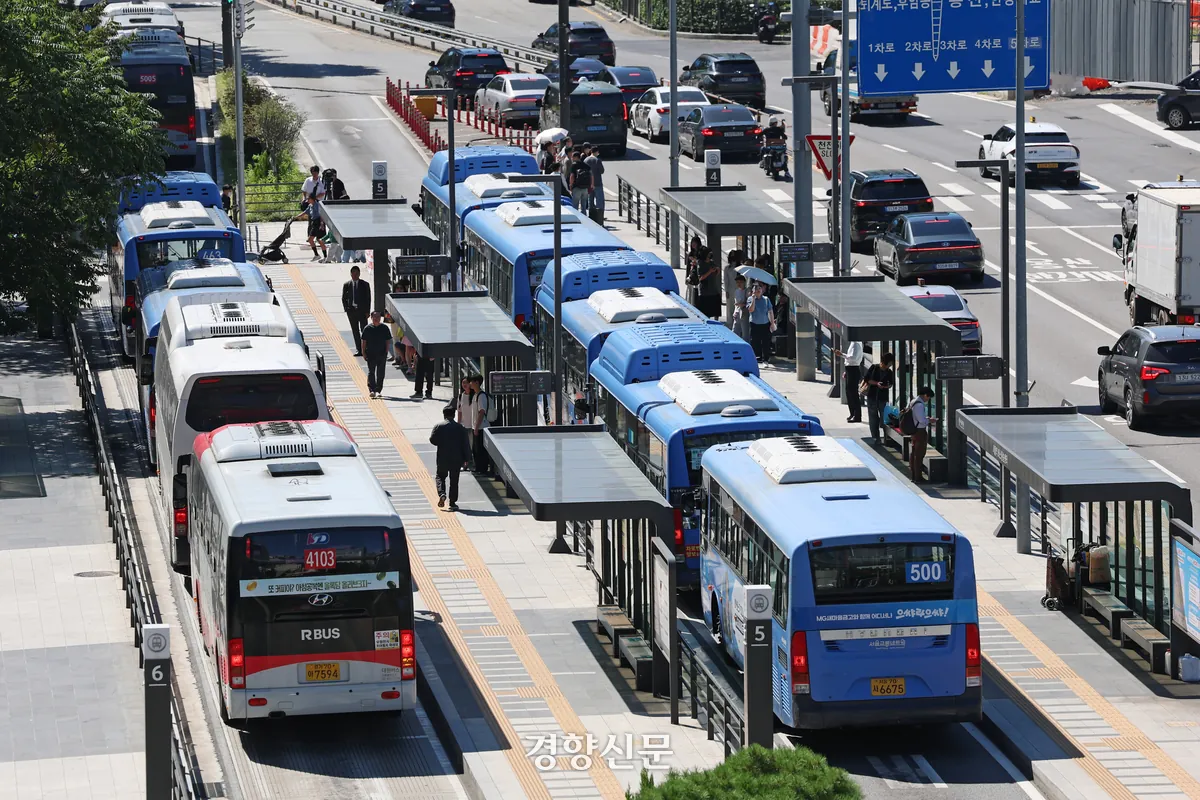
Seoul’s city bus network — carrying 3.8 million passengers a day — went on strike from 4 a.m. on September 16, 2026, after last-minute talks between bus workers and operators broke down overnight.
What happened
The Seoul Bus Workers Union and the Seoul Bus Transportation Business Association (the industry group that represents private bus operators subsidized by the city) held a second mediation session at the Seoul Regional Labor Relations Commission (a government body that facilitates labor disputes) on the afternoon of September 15. No agreement was reached before the statutory mediation deadline at midnight, and the union confirmed it would begin a strike with the first buses at 4 a.m. on September 16. More than 7,000 city buses are affected. This is the second Seoul bus strike of 2026; the first, in January (January 13–14), was already the longest in Seoul bus history at two days.
The core dispute is how to calculate ordinary wages (the legally defined base pay used to compute overtime, severance, and holiday pay) following a landmark Supreme Court en banc (full bench) ruling in December 2024 that required regular bonuses to be included in ordinary wage calculations. The specific fight is over reference hours — the monthly hour figure you divide into the monthly wage to get an hourly rate. Fewer hours = higher hourly rate = higher worker pay.
- Union position: 176 reference hours, based on an April 2026 Supreme Court ruling in the Dong-A Transportation (a separate bus company) lawsuit.
- Management position: 209 reference hours now, with retroactive recalculation once further related lawsuits are decided.
Why Korea does it this way
Seoul’s city buses are privately owned but heavily subsidized by the Seoul Metropolitan Government, which covers operating deficits in exchange for regulated fares and routes. This means wage settlements have a direct line to the city budget and, ultimately, to bus fares. Korean labor law sets a mandatory mediation process before a legal strike can begin; once mediation fails, a union that has completed a strike ballot (the Seoul union had already done so) can walk out legally. The December 2024 Supreme Court ruling on ordinary wages was a sweeping decision that affects millions of Korean workers across industries, and litigation over its exact application — including which reference-hour figure to use — is still working through the courts.
What it means for you
Daily commuters: Over 3.8 million rides a day are disrupted. The Seoul Metropolitan Government has activated emergency transport: up to 1,500 free shuttle buses on key corridors and 202 additional subway runs per day starting September 16. Check the Seoul Metro app or the city’s transport information site for live route changes.
Workers in other industries: The 176-vs-209 reference-hour fight is not unique to buses. Any Korean employee whose company has not yet renegotiated ordinary wages under the December 2024 ruling could see a similar dispute. The gap between 176 and 209 hours is roughly 19% — meaning the union’s preferred calculation would raise effective hourly base pay by that margin, flowing through to overtime and severance.
Foreign residents and expats: If you rely on Seoul city buses for your commute, plan on subway or walking alternatives from the morning of September 16 until a deal is reached. The January 2026 strike lasted two days; there is no guarantee this one stays that short.
Taxpayers and fare-payers: Because the city subsidizes bus operators, a wage increase agreed under the 176-hour formula will widen the operating deficit. Whether that eventually feeds into a fare increase would require a separate city council decision — nothing is decided yet on fares.
Watch next
- Midnight September 15 → early hours September 16: The statutory mediation window closed at midnight; any last-minute deal before buses roll at 4 a.m. would end the strike before it truly begins. If no deal by 4 a.m. September 16, a full-day walkout is in effect.
- Court rulings on pending Dong-A Transportation related cases (date not yet set — decided by Seoul courts): Management’s counter-proposal hinges on waiting for additional rulings. When those land, they will reset the reference-hour baseline for the entire bus industry.
- Seoul City Council budget session (check the Seoul Metropolitan Government website for the exact schedule): A wider subsidy gap from higher wages may require a supplementary budget. Watch for any council vote that adjusts the bus operating subsidy line — that is the first signal of a possible fare review.
Source: The Kyunghyang Shinmun (Khan.co.kr)
Was this useful?
What made the difference? Pick one.
What made the difference? Pick one.
Thanks. We read every answer.