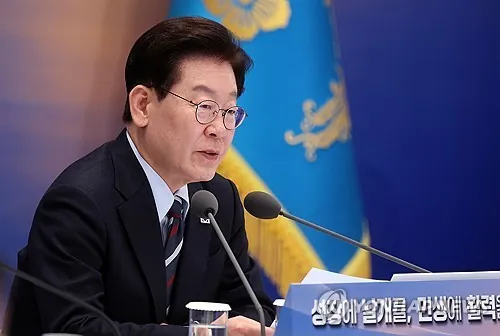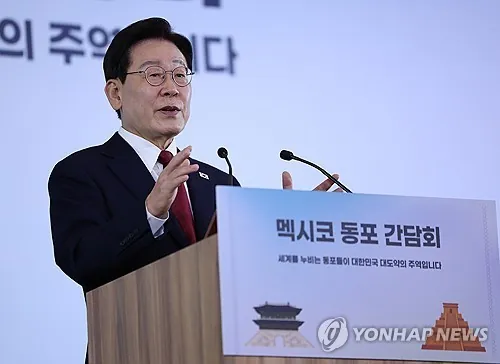
South Korean President Lee Jae Myung publicly reaffirmed on September 24, 2026, that he will not extend his presidency beyond its constitutionally set end date of June 2, 2030, dismissing speculation that his administration’s push for constitutional revision could be a vehicle for seeking a second term.
What happened
Speaking at a meeting with South Korean residents in Mexico City during a state visit, President Lee stated: “There will never be a case of my (term) going beyond June 2, 2030.” The remarks directly addressed persistent accusations from opposition parties that Lee — and his ruling Democratic Party (DP) — were engineering constitutional reform to allow him a second presidential term. South Korea’s Constitution currently bars any presidential system changes enacted during a sitting president’s term from applying to that president — a clause designed to prevent self-serving constitutional rewrites. Lee took office in June 2025 for a five-year term. Separately, during the same trip, Lee met with Mexican Senate President Higinio Martínez Miranda, urging legislative cooperation to advance bilateral agreements reached in a summit with Mexican President Claudia Sheinbaum.
Why Korea does it this way
South Korea’s Constitution limits the president to a single five-year term with no possibility of reelection — a system adopted after the 1987 democratic transition specifically to prevent authoritarian entrenchment. The anti-self-application clause for constitutional amendments exists for the same reason: it was written so that no sitting president could rewrite the rules in their own favour mid-term. Constitutional revision requires a two-thirds majority in the National Assembly (Korea’s unicameral parliament) plus approval in a national referendum — an intentionally high bar. The DP currently holds a strong parliamentary majority, which is why opposition concerns about a possible self-serving revision have been vocal despite Lee’s repeated denials.
What it means for you
This story is primarily a political signal rather than an immediate policy change — but for each audience, the signal matters:
- Investors in Korean equities (KOSPI): Presidential term certainty reduces one source of political-risk premium. Markets generally price Korean political uncertainty into the Korea discount (the persistent gap between Korean companies’ valuations and global peers). A cleaner political outlook into June 2030 supports the government’s ongoing push to narrow that discount — though any concrete effect depends on follow-through on capital-market reforms already announced. No new numbers were set in this statement; check current KOSPI reform progress at the Financial Services Commission (FSC) website.
- Foreign residents and expats: Lee’s accompanying caution — “if one goes too far or too hastily, he would face backlash” — signals a measured, not radical, reform pace. Large-scale policy reversals affecting jeonse (a uniquely Korean housing system where tenants pay a large lump-sum deposit instead of monthly rent) or income tax thresholds for foreign workers are less likely in a presidency explicitly committed to incremental change.
- Korea-watchers and policy analysts: The statement locks in a predictable policy horizon to mid-2030. Major legislative pushes — including any constitutional revision that does pass — will legally not extend Lee’s tenure. This matters for assessing continuity of current economic priorities such as the semiconductor industry support package and household debt management rules; those programs now have a confirmed window of roughly 45 months to be embedded before a transition.
If nothing is yet decided on constitutional revision content or timing, the next material step is a formal National Assembly bill — which has not been tabled as of this report.
Watch next
- Any formal tabling of a constitutional revision bill in the National Assembly: no date set — the trigger is the DP leadership announcing a bill number and committee referral. Monitor the National Assembly legislative calendar at assembly.go.kr.
- South Korea’s Q3 2026 GDP advance estimate, scheduled by Statistics Korea (KOSTAT) for late October 2026 — this is the first data release that will show whether Lee’s “effective and practical” reform rhetoric is matching economic outcomes.
- The FSC’s next capital-market reform status report: if the Korea discount narrowing initiative hits a measurable benchmark (e.g., KOSPI foreign ownership ratio or price-to-book threshold — check current figures at fsc.go.kr), that would confirm political stability is translating into market progress.
Source: Yonhap News Agency (English)
Was this useful?
What made the difference? Pick one.
What made the difference? Pick one.
Thanks. We read every answer.