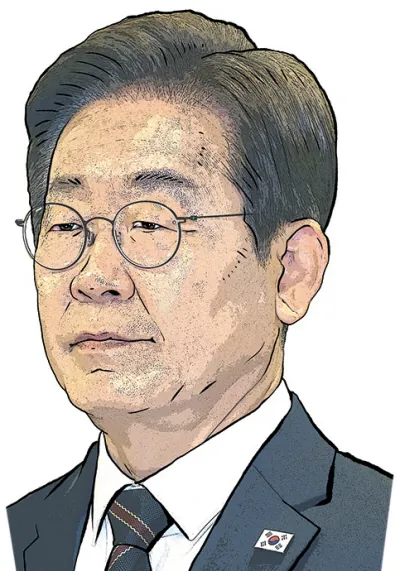
President Lee Jae-myung returned from a North and Central America tour on September 27 and is expected to immediately resume a stalled personnel appointment and order a new criminal investigation unit — two moves his office frames as advancing domestic reform.
What happened
President Lee announced on September 8 the nomination of Kim Ji-yong to head the incoming Major Crimes Investigation Agency (MCIA — a new federal body modelled partly on the U.S. DOJ, designed to handle high-profile corruption, financial crime and white-collar offences that previously fell to prosecutors and police). Opposition from hardliners within Lee’s own ruling Democratic Party caused him to order additional vetting, freezing the process. The presidential office has since reportedly found no disqualifying issues. The MCIA is scheduled to officially launch on October 2, making the vacancy urgent. Lee is also said to be weighing an order to create an insurrection special task force (a dedicated investigative unit) to pursue accountability for the December 3, 2024 insurrection attempt. Under that plan, the task force would operate initially under police authority and transfer to the newly launched MCIA as its first major case. Separately, two senior presidential office vacancies need filling: a successor to Chief of Staff Kang Hoon-sik, who submitted a resignation on September 21, and the head of the Policy Office, which has been without a chief for roughly one month.
Why Korea does it this way
Korea’s president holds concentrated executive power under a single five-year term with no re-election option, which creates strong incentives to move quickly on reform pledges in the early years before political capital erodes. The MCIA is a structural response to long-running criticism that South Korea’s prosecution service (the geomchal) held too much unchecked power over both investigation and indictment. The December 3, 2024 insurrection — a short-lived attempt by then-President Yoon Suk-yeol to impose martial law — resulted in Yoon’s removal from office and left open questions of criminal liability for others involved; the task force would be the formal mechanism to pursue those cases. Korea’s Chief Justice is nominated by the President but operates independently; once a standoff develops, as with current Chief Justice Cho Hee-dae (who has refused to re-recommend a Supreme Court justice nominee as the President requested), the Constitution provides no quick override — it resolves only when the justice’s term ends, in this case next June 2027.
What it means for you
Businesses and investors: The MCIA’s October 2 launch creates a new enforcement body with jurisdiction over financial crime, securities fraud and large-scale corporate corruption. Companies with Korean listed-equity exposure should note that MCIA investigations could move faster than traditional prosecution-led probes — the agency’s first test case will likely be the insurrection-linked proceedings. The scope and intensity of those first cases will signal how aggressively the agency intends to operate. No specific thresholds or charges have been announced yet; watch the October 2 launch statement.
Foreign residents and Korea-watchers: The judicial standoff with Chief Justice Cho — who leaves office in June 2027 — means legal uncertainty around Supreme Court composition persists for roughly nine months. This has no direct household financial impact today, but it does affect the pace of constitutional and legal rulings that can flow through to labour law, property rights and regulatory decisions.
Political risk lens: If Kim Ji-yong’s appointment clears and the insurrection task force is formally ordered, both will be read as Lee consolidating control of the enforcement apparatus. If either stalls again, it signals continued friction within the ruling coalition — a governance-discount factor for Korean sovereign and equity risk ratings. Nothing is decided yet; the appointments require a National Assembly confirmation hearing request first.
Watch next
- October 2, 2026: MCIA official launch date — watch whether Kim Ji-yong has been confirmed or whether the agency opens with an acting chief, which would signal the appointment remains contested.
- National Assembly confirmation hearing request: Date not yet set — decided by the presidential office; the ruling Democratic Party’s policy chair indicated a nomination submission is expected “at the earliest possible date.” A formal request triggers a mandatory hearing within a set window.
- Chief of Staff successor announcement: Kang Hoon-sik resigned September 21; no replacement named as of September 28. The appointment will signal which faction Lee leans on for the next governance phase — watch for an announcement within the coming week.
Source: The Kyunghyang Shinmun (경향신문) — reported by a single outlet; details on vetting conclusions and task-force timing are attributed to unnamed presidential office sources and should be treated as likely but unconfirmed.
Was this useful?
What made the difference? Pick one.
What made the difference? Pick one.
Thanks. We read every answer.



