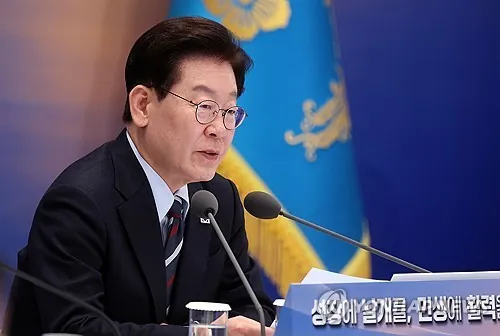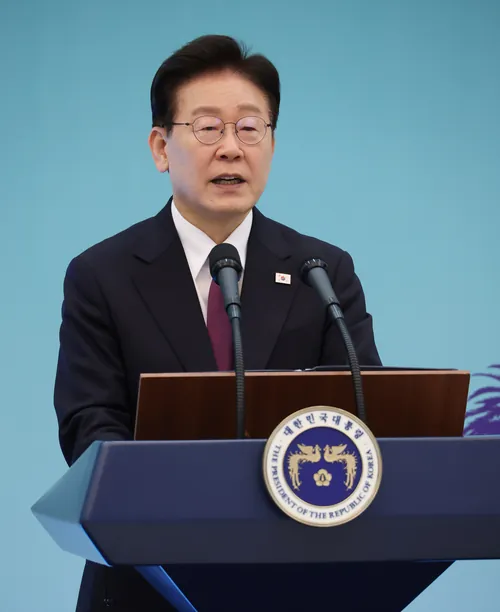
South Korean President Lee Jae-myung publicly rebuked hardliners inside his own ruling Democratic Party on October 9, accusing them of using the banner of prosecution reform to pursue personal gain and destabilise his government from within.
What happened
President Lee shared a column on X (formerly Twitter) by former Seoul education superintendent Cho Hee-yeon analysing the pattern of internal party fractures. Lee added his own commentary, saying the real problem is “people who lack ability demanding top posts and, when they fail to get their way on personnel appointments or national policy, holding up radical reform as a righteous cause and mounting internal attacks.”
The immediate trigger is a public revolt by senior figures in his own camp against the nomination of Kim Ji-yong as head of the Serious Crimes Investigation Agency (공수처, the independent anti-corruption prosecution body, abbreviated SCIA). Gyeonggi Governor Choo Mi-ae, Democratic Party lawmaker Kim Yong-min, and Im Eun-jung — head of the Gwangju Regional Serious Crimes Office — each publicly opposed the appointment. On October 5, the president had already warned that no one should “manipulate personnel matters and even specific investigation and prosecution tasks out of self-interest” under the cover of prosecution reform.
Why Korea does it this way
South Korea’s president holds a single five-year term with no re-election — a constitutional design meant to curb long-term authoritarian entrenchment. That also means the governing party’s internal factions cannot threaten a president with electoral punishment, but they can block legislation, embarrass the administration publicly, or refuse to confirm nominees through informal pressure.
Prosecution reform has been the most fractious policy battleground in South Korean politics for nearly a decade, originating in Democratic Party efforts to break what it called the conservative prosecution establishment’s grip on politically sensitive investigations. The SCIA (공수처) was itself created under President Moon Jae-in as a check on the existing prosecution service. Who leads it now matters to both the ruling party’s internal power balance and to ongoing investigations involving political figures.
What it means for you
Foreign residents and expats: No immediate impact on daily life. This is an elite personnel dispute, not a policy change affecting visas, taxes, or services.
Investors and Korea-watchers: Rule-of-law stability and predictable enforcement are key inputs to Korea’s sovereign and corporate risk ratings. A government that cannot manage its own legislative majority faces higher political risk — which can weigh on the Korean won (KRW) and on equities that are sensitive to regulatory environment. Check the current KRW/USD rate at the Bank of Korea (bok.or.kr) to see whether political noise is being priced in. If the SCIA appointment remains blocked, enforcement actions in financial crime cases could face delays, with indirect implications for corporate governance expectations.
Businesses and compliance teams: The SCIA investigates high-level corruption including cases involving public officials and large corporations. Leadership uncertainty at the agency means operational tempo could slow until the personnel dispute is resolved — date not yet set, depends on presidential persistence and party compromise.
Watch next
- The National Assembly’s confirmation hearing for SCIA nominee Kim Ji-yong — date not yet set, decided by the relevant parliamentary committee. If opposition within the Democratic Party holds, the nomination could be withdrawn or stalled past late October 2026.
- Democratic Party national convention dynamics: former superintendent Cho Hee-yeon’s column analysed pre- and post-convention division patterns; the next party leadership vote will test whether hardliners gain or lose ground — schedule to be announced by the party.
- If Lee makes further personnel moves in the prosecution or justice sphere before end-October 2026, watch whether ruling-bloc dissent escalates to a formal vote or stays at the level of public statements — a formal bloc vote would be a meaningful escalation signal.
FAQ
What is the Serious Crimes Investigation Agency in South Korea?
The Serious Crimes Investigation Agency (공수처, SCIA) is South Korea’s independent anti-corruption prosecution body, created to investigate high-level public officials — including politicians, judges, and senior prosecutors — separately from the regular prosecution service. Its leadership appointment is politically sensitive because it determines which powerful figures may face investigation.
Why is President Lee Jae-myung criticising his own party?
Lee criticised ruling Democratic Party hardliners because senior figures including Gyeonggi Governor Choo Mi-ae and lawmaker Kim Yong-min publicly opposed his nominee for the SCIA head, with the president accusing them of using prosecution reform rhetoric to pursue personal and factional interests rather than genuine policy goals.
Source: Kyunghyang Shinmun (Khan.co.kr)
Was this useful?
What made the difference? Pick one.
What made the difference? Pick one.
Thanks. We read every answer.