South Korea’s benchmark stock index broke back above the 7,000-point threshold on Monday morning, led by sharp gains in the country’s two dominant memory-chip makers, after OpenAI’s latest model release renewed global demand expectations for AI hardware.
What happened
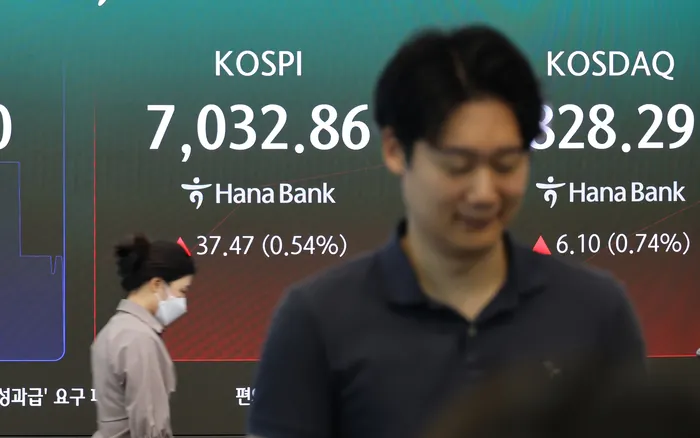
At 9:31 a.m. on September 8, the KOSPI (Korea Composite Stock Price Index, South Korea’s main stock market benchmark, roughly equivalent to the S&P 500 in the U.S.) stood at 7,076.98, up 1.17% from the previous close. The 7,000 level had last been held on August 18 — meaning the index spent 15 consecutive trading sessions below that mark before Monday’s recovery. The secondary KOSDAQ (an index focused on smaller tech and growth companies) rose 0.45% to 825.89.
SK Hynix gained 3.08%, trading at 1,838,000 won per share. Samsung Electronics rose 1.11% to 273,000 won. Both moves extended a powerful rally from the previous session, when Samsung surged 5.68% and SK Hynix jumped 8.26%, after OpenAI announced GPT-6 Astra, its most capable AI model to date. European markets were mixed and U.S. markets were closed for Labor Day.
Why Korea does it this way
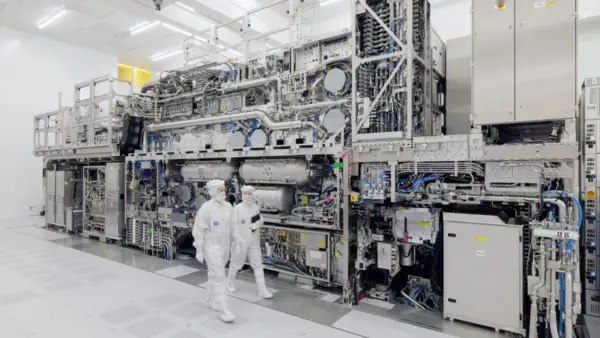
South Korea produces the overwhelming majority of the world’s HBM (High Bandwidth Memory), the specialised memory chips stacked directly beside AI accelerators (graphics processing units used for training large language models) in data-centre servers. SK Hynix supplies HBM3E to Nvidia; Samsung competes for the same customers. Because AI model launches signal imminent orders for new server builds, any high-profile model release tends to move Korean chip stocks quickly and sharply.
The KOSPI is unusually concentrated in semiconductors: Samsung Electronics alone accounts for roughly a quarter of the index’s total weight, making the index highly sensitive to any global shift in AI infrastructure spending. This concentration means global investors who want broad South Korea exposure are, by design, taking a significant bet on the AI chip cycle.
What it means for you
Investors: SK Hynix (listed on the KOSPI, ticker 000660) and Samsung Electronics (005930) are the two largest components of the MSCI Korea index, which is tracked by funds including the iShares MSCI South Korea ETF (EWY). Monday’s move reflects repricing of forward HBM order expectations — not confirmed contracts. Kieum Securities analyst Han Ji-young cautioned that “sectors will show differentiation amid profit-taking,” and flagged U.S. 10-year Treasury yields and geopolitical news flows (specifically Iran-related developments) as near-term risks that could reverse the gains.
Workers and residents: A sustained semiconductor upcycle historically supports Korean won strength and increases bonus payouts at chipmakers, which are among the country’s largest employers. No direct consumer price effect is expected from this index move.
Foreign residents and expats: A stronger KOSPI typically supports the won against the dollar and euro, which affects the cost of remittances and imported goods. Sustained won appreciation can modestly reduce the cost of imported food and electronics.
Watch next
- U.S. markets reopen Tuesday, September 9 — the first chance for American investors to react to the GPT-6 Astra announcement; their response will likely set the direction for KOSPI Wednesday morning.
- Any confirmed HBM supply agreements between SK Hynix or Samsung and major AI chip customers (Nvidia, AMD, Google) would validate or contradict the rally’s premise.
- U.S. 10-year Treasury yield movements and any Iran-related geopolitical headlines, both flagged by Kieum Securities as near-term swing factors.
Source: Electronic Times (전자신문)
Was this useful?
What made the difference? Pick one.
What made the difference? Pick one.
Thanks. We read every answer.