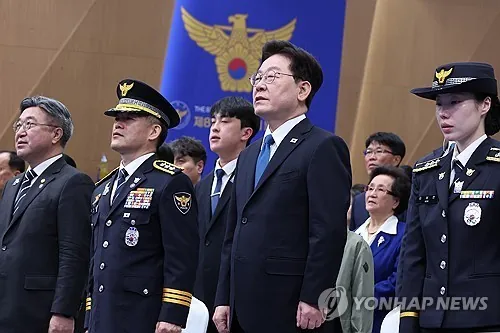
South Korean President Lee Jae Myung on Wednesday called on the national police to aggressively reform their practices and systems, while also advocating for an independent body to oversee police investigations — a direct consequence of his administration’s sweeping prosecution reform that stripped prosecutors of investigative powers.
What happened
Speaking at a ceremony marking the 81st Police Day (the annual national holiday honouring South Korea’s police force) on October 21, 2026, President Lee urged officers to “objectively look back on what has been lacking” and to “boldly address wrongful practices and systems.” He specifically called for a dedicated independent vetting mechanism to scrutinise police investigations. No legislative timeline or specific reform bill was announced at the ceremony.
Why Korea does it this way
Under the Lee administration’s prosecution reform — one of his signature policy pledges — South Korea’s prosecutors (검사, geomsa) lost their direct investigative authority and are now limited to reviewing case files, deciding indictments, and maintaining charges in court. That shift transferred the bulk of criminal investigation powers to the national police (경찰청, Gyeongchalgcheong), a significant structural change with no close parallel in most OECD countries, where prosecutors and police share overlapping powers as a mutual check. Critics of the reform have argued that concentrating investigative power in a single agency — without a robust independent oversight mechanism — creates accountability gaps, which is precisely the gap President Lee is now trying to address.
What it means for you
Foreign residents and expats: If you become involved in a criminal or civil-adjacent matter (fraud, workplace disputes, visa violations), your first — and now primary — point of contact is the police, not a prosecutor’s office. Understanding which police unit handles which type of case has become more important than before.
Business owners and investors: South Korea’s rule-of-law environment is a key input in country-risk assessments. An independent police oversight body, if enacted, would be a positive signal for institutional checks and balances; its absence until now is the concern the president himself acknowledged. No independent oversight body exists yet — one would require a separate National Assembly (국회, Gukkhoe) vote to establish.
Everyone in Korea: This is a structural governance story rather than an immediate household-finance event. No new fees, taxes, or rates were announced. The practical impact depends on whether an oversight bill passes — which has not yet been scheduled.
Watch next
- National Assembly legislation: The ruling party must table a bill establishing an independent police investigation oversight body. No bill has been filed as of October 21, 2026 — watch for a first reading date, which would be announced through the National Assembly’s official legislative calendar (date not yet set — decided by the ruling party floor leadership).
- Police Day follow-up policy package: The Ministry of the Interior and Safety (행정안전부, Haengjeong Anjeongbu) typically releases a follow-up policy document within 30 days of a Presidential Police Day speech — watch for an announcement by approximately November 21, 2026.
- Opposition response threshold: If the main opposition party (People Power Party, PPP) files a formal objection or alternative bill in the National Assembly within the next regular session (running through December 9, 2026), the reform timeline shifts to a floor vote — monitor the Assembly’s session agenda from late October onward.
FAQ
What is Korea’s prosecution reform and how does it affect police power?
The Lee administration’s prosecution reform removed prosecutors’ investigative authority, leaving them responsible only for indictments; this transferred primary investigative power to the national police, making police oversight more critical than before.
Does South Korea now have an independent body to oversee police investigations?
Not yet — as of October 21, 2026, President Lee called for one to be created, but no bill has been tabled and no independent oversight body currently exists.
Source: Yonhap News Agency (English)
Was this useful?
What made the difference? Pick one.
What made the difference? Pick one.
Thanks. We read every answer.