South Korea and the U.S. announced a three-project, $196.3 billion strategic investment package on October 1, 2026 — with Korean-designed nuclear reactors potentially entering the American market for the first time.
What happened
President Trump confirmed South Korea’s three flagship U.S. investment projects: a gas-fired power plant in Texas, eight large nuclear reactors, and the Alaska LNG (liquefied natural gas) pipeline. Together they total $196.3 billion, covering roughly 98% of the $200 billion pledge South Korea made under its trade agreement framework with the U.S.
- Eight nuclear reactors — $120 billion ($100 billion construction + $20 billion contingency). Built in three phases. Phase 1: two Westinghouse AP1000 units. Phase 2: two more AP1000s plus two APR1400 (South Korea’s own reactor design, developed by KEPCO — Korea Electric Power Corporation — and KHNP — Korea Hydro & Nuclear Power). Phase 3: two additional AP1000s. If the two APR1400 units are built as planned, it will be the first time a foreign reactor design has been deployed on U.S. soil. A long-running intellectual property dispute between KEPCO/KHNP and Westinghouse was settled last year; the parties are now amending that agreement to open the U.S. market to the APR1400.
- Encinal combined-cycle gas plant, Texas — $22.3 billion. Targeting 6 GW of generation capacity primarily for AI data centers. Phase-one operation targeted for 2029, full operation by 2032. A long-term power purchase agreement (PPA — a contract committing a buyer to purchase electricity at a fixed price) has not yet been finalized.
- Alaska LNG — $54 billion. A roughly 1,300 km pipeline carrying natural gas from Alaska’s North Slope, liquefied and exported to Asian markets. The Korean government has flagged this as the most commercially uncertain of the three, with one official quoted saying “commercial rationality is lacking.”
Why Korea does it this way
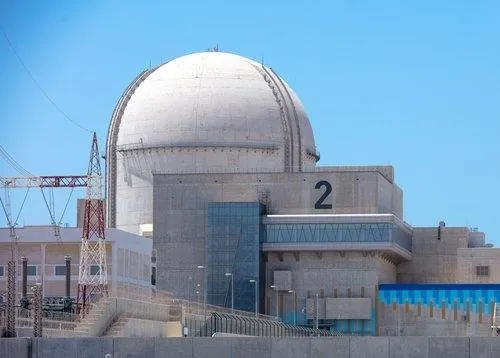
South Korea has virtually no domestic fossil-fuel reserves and has relied on nuclear power for roughly a third of its electricity for decades. KEPCO and KHNP built that expertise into the APR1400 design, which is already operating in South Korea and the UAE (Barakah Nuclear Power Plant). Winning a U.S. deployment would validate the design for other markets globally. The broader $200 billion pledge fits a pattern of large Korean conglomerates and state-linked firms offering strategic U.S. investments to smooth trade negotiations — a dynamic that accelerated after the 2025 tariff escalation cycle.
What it means for you
Investors in Korean-listed stocks: KEPCO (015760.KS) and KHNP are the primary beneficiaries if the nuclear phases proceed. A 5–10% Westinghouse stake acquisition by Korean entities is reportedly under consideration; a 10% stake is described as the minimum threshold for board participation. None of this is contracted yet — watch for definitive agreements before pricing in upside. Korea Electric Power is a constituent of major Korea equity indices.
The Korean power supply chain: Doosan Enerbility (034020.KS), which manufactures reactor components, and engineering firms already qualified for APR1400 construction stand to win sub-contracts if Phase 2 proceeds. Domestically, KEPCO’s transmission grid around Seoul remains congested — these overseas projects do not directly relieve that bottleneck for data-center developers waiting for grid connections inside Korea.
Energy consumers and residents in Korea: The Alaska LNG project, if completed, would add a new supply source for Korean LNG imports and could provide modest downward pressure on gas import prices over the long term — but commercial viability is still unresolved, and any price effect is years away.
Foreign residents and workers: The Texas gas plant targeting AI data-center power demand reinforces Korea’s position as a supplier to the U.S. tech build-out, which supports Korea’s semiconductor and equipment export sector and the jobs tied to it.
Watch next
- Nuclear Phase 2 commercial agreement: The Korean government classified the eight-reactor project as subject to “additional commercial feasibility review” before Trump’s announcement. Watch for a formal government-to-government or KEPCO/Westinghouse contract signing — no date set yet; the trigger is completion of that feasibility review.
- Encinal PPA deadline: The Texas plant’s long-term power purchase agreement is not yet signed. A PPA is required before financing can be confirmed; track announcements from KEPCO or the Texas project entity in Q4 2026.
- Alaska LNG go/no-go: The Korean government has reserved the right to withdraw if commercial terms do not improve. Watch for a Korean cabinet-level decision, expected to follow an internal commercial rationality review — date not yet set, decided by the Ministry of Trade, Industry and Energy.
Source: The Kyunghyang Shinmun (Khan.co.kr)
Was this useful?
What made the difference? Pick one.
What made the difference? Pick one.
Thanks. We read every answer.