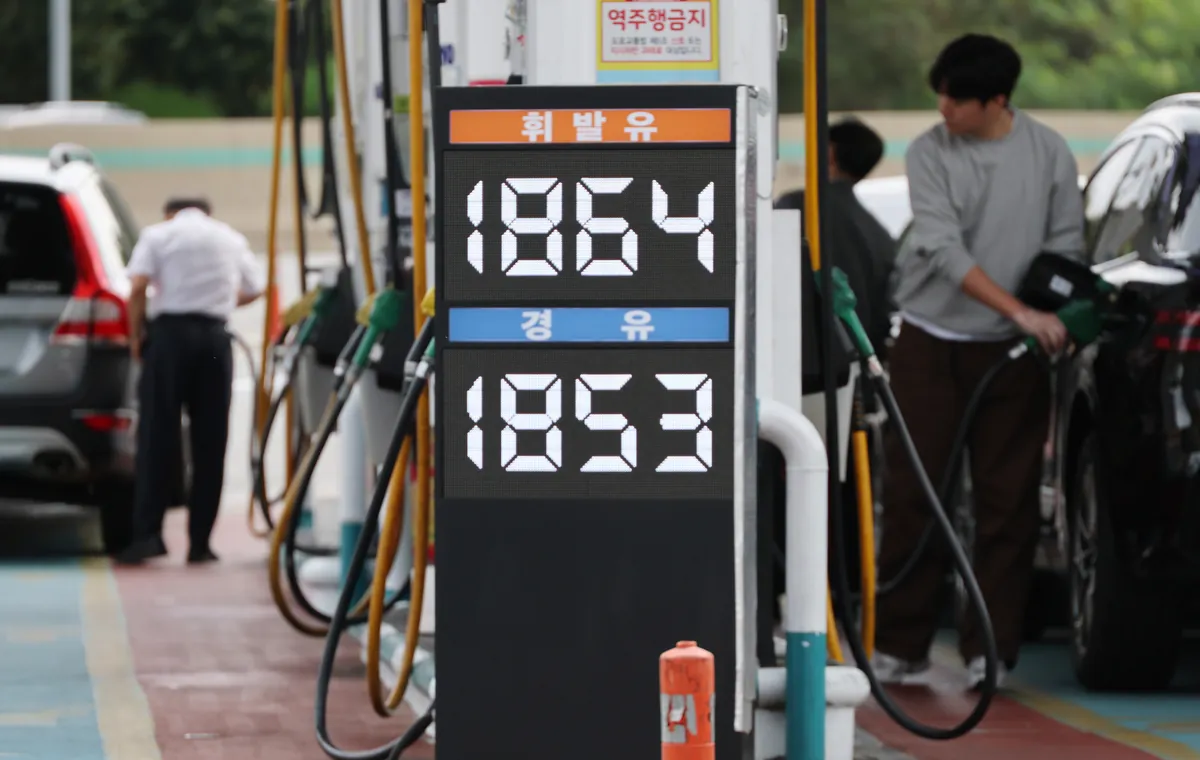
South Korea’s government froze its fuel-price cap for an 11th time on October 17, 2026 — but the country’s leading economic newspaper argues the policy has overstayed its welcome.
What happened
South Korea introduced an oil price cap (a policy that fixes the retail price of gasoline and diesel below market rates, with the government compensating refiners for the difference) in March 2026, after surging international crude prices — driven by the Middle East conflict — pushed fuel costs higher. The government has since rolled the cap over 11 times, most recently on October 17. Officials cited continued inflationary pressure and tight global supply as justification. To fund the scheme, the government earmarked 4.2 trillion won (approximately US$3 billion) in reserve funds through a supplementary budget (추경, a mid-year spending bill passed outside the regular budget cycle). The policy is now in its seventh month.
Why Korea does it this way
Korea imports nearly all of its crude oil, meaning domestic fuel prices track global oil markets almost one-for-one. When prices spike — as they did after the 2022 Ukraine war and again in 2026 — pump prices surge rapidly and feed into broader inflation because trucking, heating and petrochemicals all run on imported fuel. Seoul has a long tradition of using fuel tax cuts and price controls as a short-term shock absorber, justified by the economy’s structural vulnerability to energy-cost pass-through. The reimbursement model — where the state backstops refiner losses — is the standard mechanism when outright tax cuts are insufficient or slow to pass.
What it means for you
Drivers: Pump prices are being held artificially low right now, but the editorial warns this is creating price distortions. Gasoline consumption rose 3% year-on-year in September 2026 — the first such increase since March — suggesting drivers are not adjusting their habits. Any exit from the cap will mean a step-up at the pump; the government has indicated it would prefer a gradual phase-out to spread the shock.
Taxpayers and public transport users: The 4.2 trillion won subsidy pool is funded from public finances. The editorial notes that because the cap applies uniformly regardless of income, higher-income and discretionary drivers receive a larger absolute benefit — meaning bus and metro commuters effectively cross-subsidise private car use.
Foreign residents and expats: If you drive in Korea, enjoy the capped prices while they last. A phased exit would raise costs gradually rather than in one jump; watch the government’s monthly announcement for when the cap lifts.
Investors in Korean refiners (e.g., companies listed on the Korea Exchange, or KRX): A separate dispute is unresolved: refiners argue their compensation should include Singapore benchmark oil product prices (MOPS — the regional pricing reference for refined fuels) and opportunity-cost losses from an accompanying export-restriction measure. The government is currently settling only on a cost basis. Resolution of this accounting dispute will affect refiner margins; check KRX filings for the latest guidance from the companies involved.
FAQ
What is Korea’s oil price cap and how does it work?
Korea’s oil price cap fixes retail gasoline and diesel prices below market rates; the government reimburses refiners for the gap using public funds. Introduced in March 2026, it has been extended 11 times as of October 17, 2026, with 4.2 trillion won allocated through a supplementary budget to cover the cost.
When will Korea’s fuel price cap end?
No end date has been announced; the government froze the cap for an 11th time on October 17, 2026, citing ongoing inflationary pressure. The Kyunghyang Shinmun editorial calls for a planned exit strategy with gradual price increases, but no specific timeline or trigger threshold has been set by the government.
Watch next
- 12th cap decision: The government reviews and announces each cap extension on a rolling basis — watch for the next official announcement from the Ministry of Trade, Industry and Energy (MOTIE), date not yet set, which will signal whether a gradual phase-out has begun.
- Monthly CPI release: Statistics Korea publishes the Consumer Price Index around the first week of each month. If the headline CPI figure shows sustained cooling, it strengthens the case for lifting the cap; a print above the government’s inflation comfort zone extends it.
- Refiner compensation ruling: The dispute between authorities and refiners over whether MOPS benchmark prices and opportunity-cost losses must be included in the reimbursement calculation is unresolved — a ruling or negotiated settlement will directly affect the financial results of Korean-listed refining companies.
Source: The Kyunghyang Shinmun (경향신문)
Was this useful?
What made the difference? Pick one.
What made the difference? Pick one.
Thanks. We read every answer.