South Korea’s Finance Ministry said Friday that the economy is holding its recovery course, with semiconductor-driven exports and stronger investment doing the heavy lifting.
What happened
In its monthly economic assessment report released on October 16, 2026, the Ministry of Economy and Finance (MOEF) — South Korea’s equivalent of a combined Treasury and Budget Office — said the domestic economy has maintained a solid recovery. The ministry pointed to two main engines: exports, particularly in semiconductors (the logic chips and memory chips that go into everything from smartphones to AI servers), and rising investment. The report is a regular publication MOEF uses to give an official government read on economic conditions; it does not set policy but signals how policymakers view the outlook.
Note: The article page was inaccessible to automated fetching; this brief is based on the verified headline, summary, and excerpt provided. Specific figures (growth rates, export values) were not recoverable — check the full report at the MOEF website for precise numbers.
Why Korea does it this way
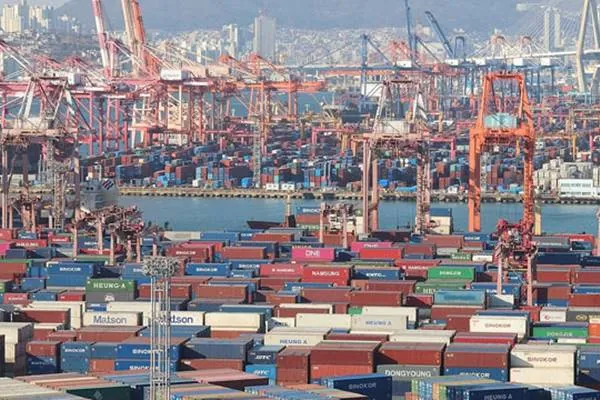
Exports account for roughly 40% of South Korea’s GDP (gross domestic product — the total value of everything the country produces), making Korea one of the world’s most trade-exposed economies. Semiconductors alone typically represent around 20% of total exports, so swings in global chip demand hit Korean growth quickly and directly. Because trade flows are so central, the government monitors and publicly reports on export conditions monthly rather than quarterly, as many other countries do. Korea’s economic fate is therefore unusually sensitive to decisions made in Washington — on tariffs or tech export controls — and in Beijing, its largest trading partner.
What it means for you
Workers and job-seekers: A recovery led by semiconductor exports benefits manufacturing workers and engineers at chipmakers and their suppliers first. If investment is also rising, construction, equipment, and logistics jobs typically follow within one to two quarters — but the article does not specify a timeline or hiring numbers, so watch the next monthly employment report from Statistics Korea for confirmation.
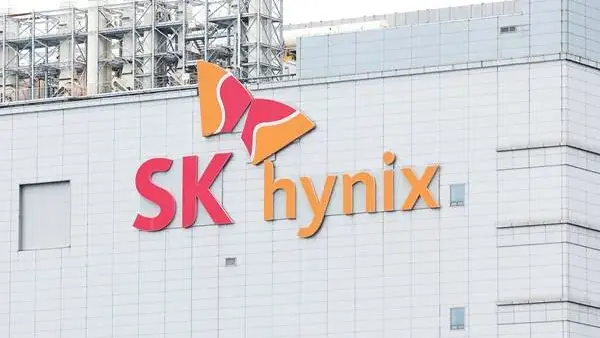
Investors in Korean equities: Samsung Electronics and SK hynix together make up a large share of the KOSPI (Korea Composite Stock Price Index — South Korea’s main stock exchange benchmark). A government assessment that semiconductor exports are fuelling recovery is consistent with positive sentiment for those names, but no earnings figures or contract details were disclosed in this report. The MOEF assessment is a lagging indicator — it describes what has already happened, not what will happen next.
Foreign residents and importers: Export strength generally supports the won (South Korea’s currency, ticker KRW). A stronger won makes imported goods — including foreign groceries, electronics, and overseas travel — modestly cheaper. Check the current KRW/USD rate at the Bank of Korea (bok.or.kr) for the live figure.
Borrowers: This report alone does not move interest rates. The Bank of Korea (BOK) sets the base rate independently; check the current policy rate at bok.or.kr — the article does not state it. A sustained recovery narrative could reduce pressure on the BOK to cut rates further, meaning variable-rate mortgage holders should not assume another cut is imminent.
Watch next
- Bank of Korea rate decision: The BOK’s Monetary Policy Committee meets on a scheduled cycle — check bok.or.kr for the exact next meeting date. If the recovery language from MOEF carries into the BOK’s own assessment, a hold (no change) becomes more likely than a cut.
- Statistics Korea Q3 2026 GDP flash estimate: Typically released in late October. If the advance figure prints above 0.5% quarter-on-quarter growth, it would corroborate MOEF’s recovery narrative; a miss would complicate it.
- Korea Customs Service monthly trade data (November release, covering October 2026): Semiconductor export value year-on-year is the single number to watch. A continued positive print would confirm the trend; a slowdown — particularly if driven by US or China demand — would be an early warning signal.
FAQ
Is South Korea’s economy growing in 2026?
According to the Finance Ministry’s October 16, 2026 monthly report, the economy has maintained a solid recovery driven by semiconductor exports and investment — but the specific GDP growth rate was not disclosed in the available article text; check the full MOEF report at moef.go.kr for the exact figure.
Why do semiconductor exports matter so much to South Korea’s economy?
Semiconductors are South Korea’s single largest export category and typically account for around one-fifth of total exports, meaning a rise or fall in global chip demand — driven by AI spending, consumer electronics cycles, or trade policy — feeds through rapidly into Korean GDP, the won, and employment.
Source: KBS World Radio
Was this useful?
What made the difference? Pick one.
What made the difference? Pick one.
Thanks. We read every answer.