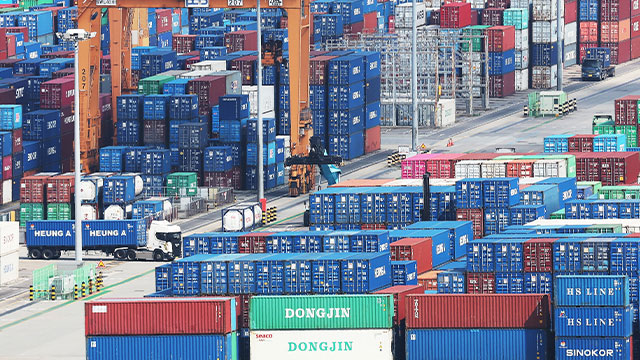
South Korea’s exports jumped more than 80 percent in the first ten days of September 2026 compared with the same period a year earlier, hitting a new record high driven by semiconductors.
What happened
Provisional data released Friday (September 11, 2026) by the Korea Customs Service (KCS) — the agency that tracks trade flows in near-real time — showed exports rose 82.6 percent year-on-year during September 1–10, reaching US$34.97 billion, the highest figure ever recorded for that ten-day window. Semiconductors were the primary driver, continuing a streak of strong chip deliveries that has persisted through much of 2026. The KCS publishes these early-month snapshots (covering the 1st–10th and 1st–20th of each month) to give markets an early read on trade momentum before the full monthly tally arrives.
Why Korea does it this way
Exports account for roughly 40 percent of South Korea’s GDP, making the country unusually sensitive to global demand cycles and trade policy decisions in Washington and Beijing. South Korea deliberately built this export-dependent model after the 1960s, channelling state support toward large industrial conglomerates (chaebol — family-controlled, diversified business groups such as Samsung and SK) to compete in global markets rather than relying on domestic consumption. Semiconductors — particularly DRAM memory and NAND flash chips — became the single largest export category over the past two decades, meaning a global up-cycle in chip demand translates almost immediately into stronger Korean trade numbers, a firmer Korean won (South Korea’s currency, ISO code KRW), and faster GDP growth.
What it means for you
Investors: Samsung Electronics and SK Hynix together dominate global DRAM supply and carry significant weight in the KOSPI 200 index (South Korea’s benchmark stock index). A sustained export surge of this magnitude historically supports earnings upgrades for both companies; check current index weights and analyst consensus before acting — this is a fact, not advice. Supply-chain partners (substrate, equipment, chemical suppliers) in Korea and Japan also tend to see order visibility improve during up-cycles.
Workers and the broader economy: Strong export data reduces near-term pressure on the Bank of Korea (South Korea’s central bank) to cut rates aggressively to stimulate growth. That said, if the surge is concentrated in chips rather than broad-based, manufacturers outside the semiconductor cluster — autos, steel, petrochemicals — may not feel the same lift.
Foreign residents and importers: A strong export reading tends to support the Korean won against the US dollar. A firmer won lowers the cost of imported goods — including foreign food products, electronics, and travel — for people earning in KRW. Check the current USD/KRW rate at the Bank of Korea website for the latest figure.
Savers and borrowers: Robust growth data reduces the urgency for rate cuts. For households with variable-rate loans, this means rates may stay higher for longer than they would if the economy were weakening. Check the current Bank of Korea base rate at bok.or.kr for the live policy rate level.
Watch next
- September 1–20 export flash (KCS): The Korea Customs Service publishes the first-20-days snapshot around September 21, 2026. If the pace holds above 50 percent year-on-year, it signals the full-month figure will likely be a record for September overall.
- Full September trade balance (Ministry of Trade, Industry and Energy): Released on approximately October 1, 2026. Watch whether the trade surplus widens alongside the export jump — a larger surplus reinforces won strength and GDP momentum.
- Bank of Korea Monetary Policy Board meeting: Date not yet set for the October 2026 meeting — decided by the BOK board calendar. If September export and inflation data both come in strong, the board is less likely to cut rates; a decision to hold or cut will directly affect variable mortgage costs for millions of Korean households.
Source: KBS World Radio
Was this useful?
What made the difference? Pick one.
What made the difference? Pick one.
Thanks. We read every answer.