Korea’s economy is being powered by a historic semiconductor export surge, but a new government report warns that the gains are pooling at the top of the industrial ladder and have not filtered down to household incomes or everyday spending.
What happened
The Korea Development Institute (KDI — the government’s primary economic think tank) published its September 2026 Economic Trends report on September 7, flagging a widening split between Korea’s export engine and its domestic economy. In August 2026, total exports jumped 68.7% year-on-year, with semiconductors accounting for $46.65 billion — nearly half (47.5%) of all goods shipped out of the country. Annual exports are on track to exceed $1 trillion for the first time. Facility investment (spending on new factories and equipment) rose 24.9% in July. AI-related manufacturing, including semiconductors, machinery (+9.6%), and electrical equipment (+4.0%), drove overall industrial output up 3.1% year-on-year in July.
But on the household side, the picture is almost the reverse. Retail sales fell 0.8% year-on-year in July. Service-sector output, which more directly reflects what ordinary people are spending, slowed sharply — accommodation and food services shrank 1.0% after growing 1.1% in June. Real wages (purchasing power after inflation) rose only 0.3% in the first half of 2026. Employment among workers in their twenties slipped, with youth unemployment rising 0.5 percentage points.
Why Korea does it this way
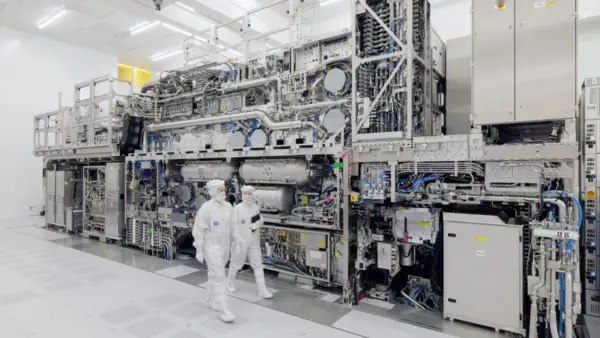
Korea built its prosperity on export-led growth anchored by a small number of giant industrial conglomerates called chaebol (family-controlled conglomerates such as Samsung and SK). Semiconductors have been the crown jewel of that model for decades: chips now make up nearly half of all Korean exports. When global demand for AI processors and memory chips surges — as it has since 2024 — Korean GDP and investment figures can look very strong even if the workers building those fabs (semiconductor fabrication plants) are contractors whose jobs end when construction does, and even if the chip factories themselves employ relatively few people per dollar of output compared with labour-intensive service industries.
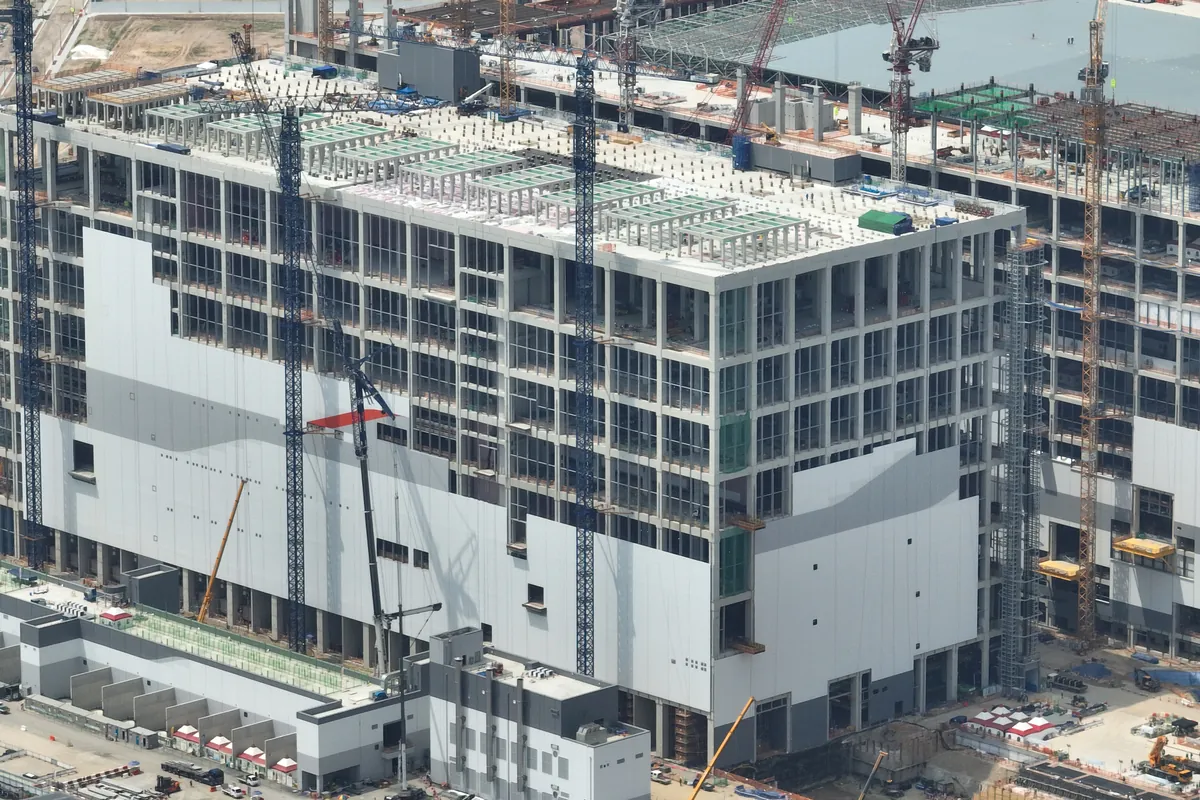
Korea is currently building what is intended to be the world’s largest chip-manufacturing cluster in Yongin (a city about 40 km south of Seoul), announced as one of three government mega-projects on June 29. The cluster’s timeline depends heavily on securing sufficient power and water infrastructure — constraints that sit outside the chip companies’ control.
What it means for you
Workers and job-seekers: Economists at Sookmyung Women’s University and Chung-Ang University quoted in the KDI report note that semiconductor and data-centre construction creates jobs, but they are transitory — once the building is done, the headcount falls. The chip industry itself is, in the words of one economist, “not employment-friendly”: a cutting-edge fab generates enormous revenue with a relatively small permanent workforce. Broad income gains would require the productivity windfall from AI to reach small and medium-sized enterprises (SMEs) and the service sector, and that has not happened yet.
Consumers and residents: Weak real wage growth of 0.3% means purchasing power is barely moving. Falling retail and food-service numbers suggest households are cautious. Foreign residents and expats will feel this in the same way locals do — flat wages, subdued restaurants and shops, while headlines celebrate record exports.
Investors: The Hyundai Research Institute (a private think tank) warned of a “K-shaped polarisation (a recovery where upper-income groups rebound while lower-income groups stagnate)” — strong exports but slumping domestic demand. Korea’s KOSPI index is heavily weighted toward semiconductor names, so index-level returns can diverge sharply from the broader economy. Manufacturing capacity utilisation edged up only slightly, to 74.9% from 74.7%, suggesting spare capacity remains even amid the boom. Nothing in this article constitutes investment advice.
Energy and infrastructure watchers: The Yongin chip cluster and associated data centres will require substantial new power capacity. Electricity pricing and grid-expansion decisions have not yet been finalised, and those decisions will affect both industrial costs and residential utility bills.
Watch next
- KDI’s October Economic Trends report — whether domestic consumption figures recover or the divergence widens.
- Government announcements on power and water approvals for the Yongin Semiconductor Cluster, which set the timeline for when fabs can break ground and eventually hire.
- Second-half 2026 wage data, due later this year, which will show whether the 0.3% real-wage gain from the first half held or softened further.
Source: The Korea Herald / Kyunghyang Shinmun (English)
Was this useful?
What made the difference? Pick one.
What made the difference? Pick one.
Thanks. We read every answer.