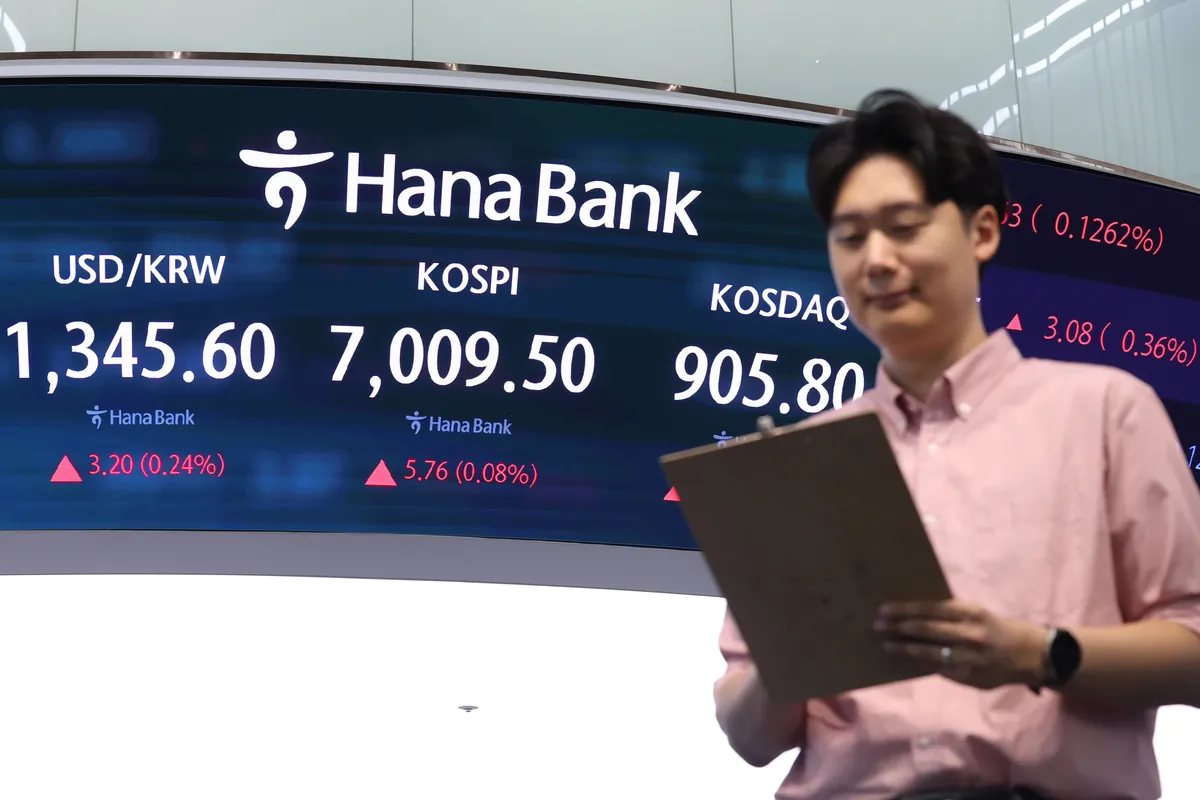
A wave of AI-driven hacking attacks on South Korea’s financial sector sent cybersecurity stocks sharply higher on the KOSDAQ (Korea’s tech-heavy stock exchange, comparable to the Nasdaq) on October 6, 2026.
What happened
Multiple cybersecurity stocks listed on KOSDAQ posted double-digit gains on the morning of October 6. AhnLab — widely regarded as Korea’s flagship security software company — rose 12.99%. Genians gained 22.30% and Sandslab 20.58%, with both briefly hitting the upper price limit (the 30% daily circuit-breaker cap that Korean exchanges impose on individual stocks to control volatility). RaonSecure surged 27.58% and Monitorlab climbed 14.85%. The catalyst: a string of recent incidents in which AI-assisted attacks targeted financial institutions, combined with the rapid spread of autonomous AI agents that security researchers say expand the attack surface.
Why Korea does it this way
Korea imposes a ±30% daily price limit on individual stocks — a rule designed to dampen speculative swings in a retail-investor-heavy market where individual traders account for a large share of KOSDAQ volume. This means a stock can gain at most 30% in a single session, so “hitting the upper limit” is the strongest single-day signal available. Korea’s cybersecurity industry is dominated by a handful of domestic specialists; the public sector (government agencies, state-run banks) is required by regulation to source security software from certified Korean vendors, which concentrates demand in a small group of listed companies. Fourth-quarter government IT budget disbursements historically drive a seasonal bump in security procurement contracts.
What it means for you
Investors — AhnLab (KOSDAQ: 053800), Genians (KOSDAQ: 263860), RaonSecure (KOSDAQ: 355860), Monitorlab (KOSDAQ: 348030), and Sandslab (KOSDAQ: 411080) are the names in play. All five are small- to mid-cap KOSDAQ constituents; single-session moves of 13–28% on sentiment-driven news are common in this segment and can reverse quickly. No index weight or contract details were reported.
Financial-sector employees and corporate IT teams — The incidents that triggered the rally have not been fully disclosed publicly, but Yuanta Securities analyst Kwon Myeong-jun stated on October 6 that “the public sector recognizes the severity and importance of cybersecurity and is likely to expand the application of cybersecurity measures.” If your organisation handles financial data, expect tighter compliance checks and possible mandatory security audits in coming months.
Foreign residents and expats — If you use Korean internet banking or fintech apps (as most residents must for bill payments and government services), the underlying incidents are a reminder to enable two-factor authentication and monitor for phishing attempts styled to mimic Korean financial institutions.
FAQ
Why did Korean cybersecurity stocks surge on October 6, 2026?
A series of AI-assisted hacking incidents targeting South Korea’s financial sector drove investor expectations of higher government and private spending on cybersecurity, pushing stocks like RaonSecure (+27.58%), Genians (+22.30%), and AhnLab (+12.99%) sharply higher on KOSDAQ. The spread of autonomous AI agents has amplified concerns about the scale of future attacks.
What does ‘hitting the upper price limit’ mean for a Korean stock?
Korean stock exchanges cap daily price moves at ±30% per session; when a stock hits that ceiling it means buyers outnumber sellers at every price up to the limit — Genians and Sandslab both reached this cap briefly on October 6, signalling exceptionally strong demand on that day.
Watch next
- Q4 government IT procurement awards — Korea’s fiscal year closes December 31; major cybersecurity contract announcements from ministries and state-run financial institutions typically land October–November. Watch for tender results on the Korea Public Procurement Service portal (date not fixed — decided by individual agencies).
- Official disclosure of the financial-sector incidents — The Financial Services Commission (FSC) and Korea Internet & Security Agency (KISA) are the bodies that would publish formal breach notices. No disclosure date has been set; check FSC and KISA press releases for specifics on which institutions were affected and the remediation timeline.
- AhnLab and Genians earnings — Both companies report Q3 2026 results in late October (exact dates not yet announced). Revenue guidance and new contract disclosures will be the first hard data on whether the security-spending wave translates into booked revenue.
Source: The Kyunghyang Shinmun (경향신문)
Was this useful?
What made the difference? Pick one.
What made the difference? Pick one.
Thanks. We read every answer.