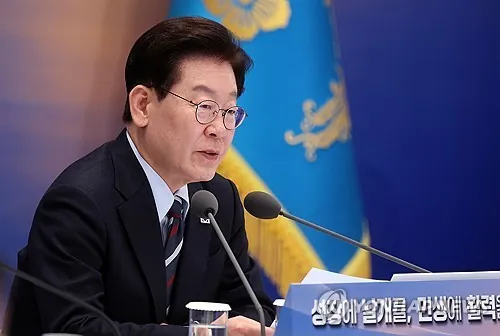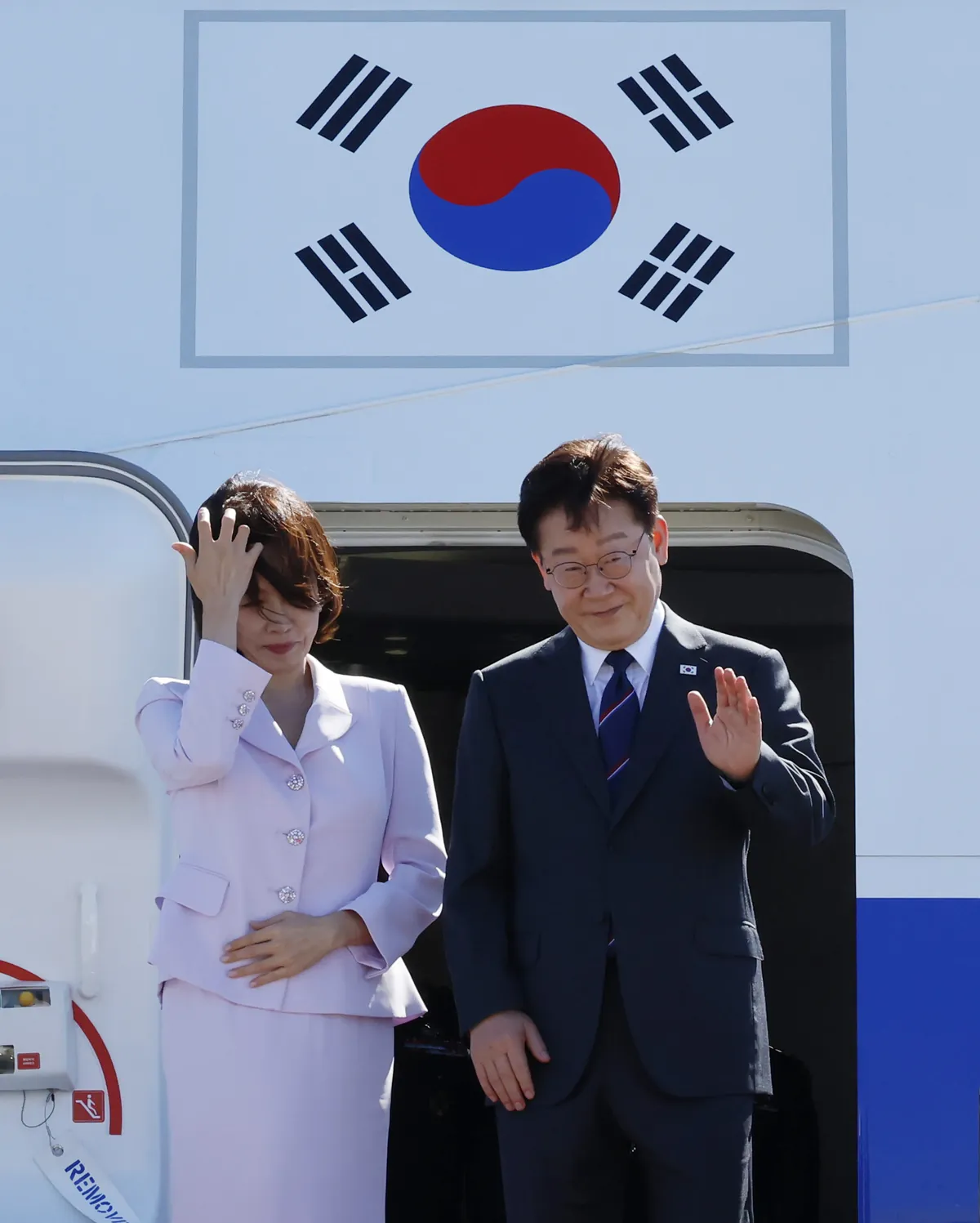
South Korean President Lee Jae Myung left for a state visit to France on September 6, pledging to act as a “pacemaker” for renewed U.S.-North Korea diplomacy and calling for a constitutional overhaul to prevent any future abuse of presidential power.
What happened
President Lee and First Lady Kim Hea Kyung departed Seoul Airport on the morning of September 6, 2026, bound for Paris. In an interview with Le Monde (a leading French daily newspaper) ahead of the trip, Lee said South Korea wants to “gradually build small but concrete cooperation” in areas where U.S. and North Korean interests overlap, positioning Seoul as a facilitator rather than a principal in any resumed talks. He also called a constitutional amendment “necessary,” citing three goals: tightening the conditions under which a president can declare martial law (nationwide emergency rule), enshrining the May 18 Democratization Movement (the 1980 pro-democracy uprising in Gwangju that ended in a military crackdown) in the constitution’s preamble, and redistributing executive authority to reduce the risk of power concentration. The visit follows French President Emmanuel Macron’s trip to Seoul in April 2026, which Seoul described as the bilateral relationship “advancing to a new stage.”
Why Korea does it this way
South Korea’s constitution grants the president sweeping powers, including the authority to declare martial law — a provision that became acutely controversial in December 2024 when then-President Yoon Suk Yeol briefly attempted to invoke it before the National Assembly (South Korea’s parliament) voted to block the move. That episode reignited a long-running debate about whether the single five-year presidential term (presidents cannot be re-elected) and concentrated executive power leave the system vulnerable to unilateral action. Constitutional amendments require a two-thirds majority in the National Assembly and a national referendum, making them rare but not impossible. On the inter-Korean front, South Korea has historically seen itself as an indispensable bridge between Washington and Pyongyang, though Seoul’s actual leverage depends heavily on the state of U.S.-North Korea relations at any given time.
What it means for you
For foreign residents and expats, a constitutional amendment process — if it gains momentum — would be a multi-year political story rather than an immediate policy change. Day-to-day life is unaffected for now. For investors and Korea-watchers, Lee’s diplomatic positioning matters: a warmer inter-Korean atmosphere historically reduces the geopolitical risk premium (the discount that investors apply to Korean assets because of North Korea proximity) that weighs on Korean equities (stocks) and the won (South Korea’s currency). The KOSPI (Korea’s main stock index) and Korean government bonds are the instruments most sensitive to inter-Korean sentiment shifts. For businesses operating in Korea, the constitutional reform agenda signals that the Lee administration intends to pursue structural governance changes, which could eventually affect regulatory and judicial frameworks. Nothing is decided yet — a formal amendment bill has not been tabled, and any change requires a referendum.
Watch next
- Outcome of Lee–Macron summit talks in Paris: whether France backs Seoul’s mediator role on North Korea, expected mid-September 2026.
- National Assembly debate on a constitutional amendment bill: no date set yet; watch for the ruling party’s formal tabling of draft text.
- Any signal from Washington or Pyongyang responding to Lee’s “pacemaker” offer — U.S. State Department briefings are the first place to watch.
This report is based on a single outlet’s account ahead of official summit statements; specific outcomes of the Paris meetings have not yet been reported. Details may be updated as the visit proceeds.
Source: The Korea Herald / Kyunghyang Sinmun (English)
Was this useful?
What made the difference? Pick one.
What made the difference? Pick one.
Thanks. We read every answer.