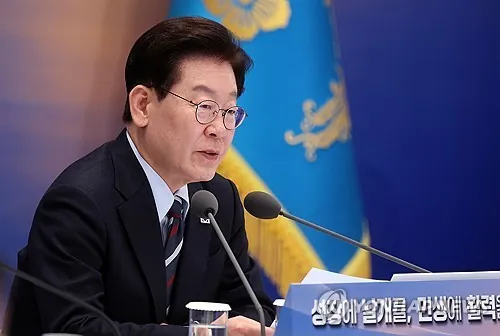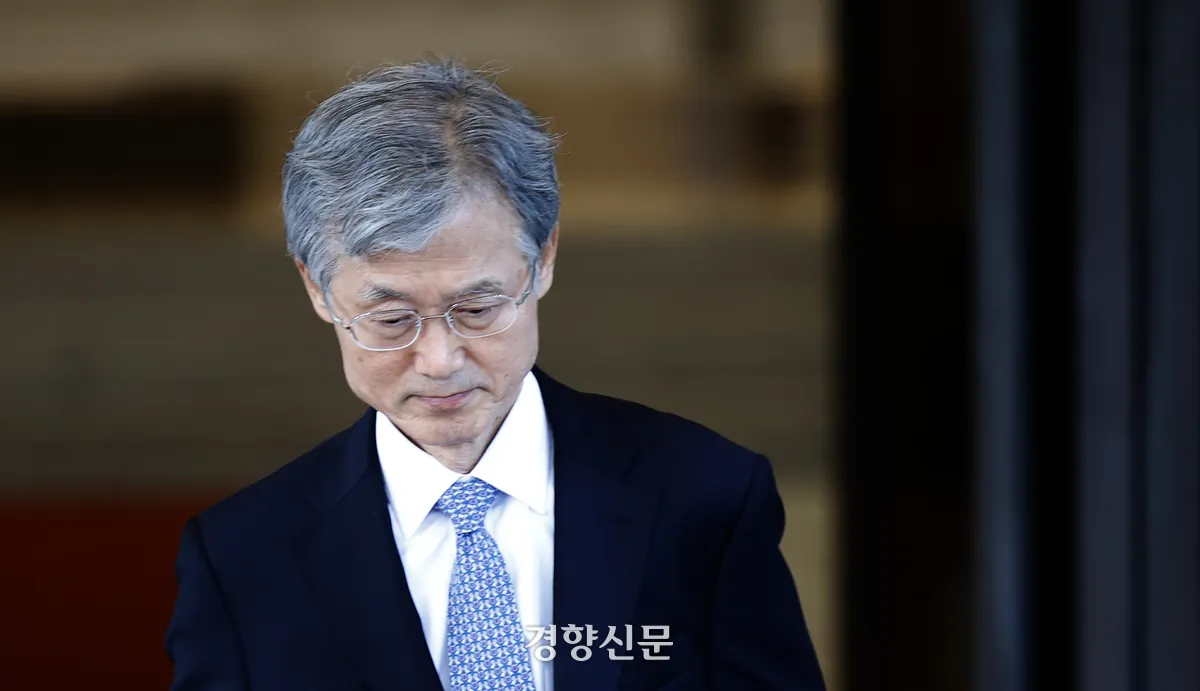
South Korea’s presidential office said Tuesday it will not pursue a constitutional competence dispute against Supreme Court Chief Justice Cho Hee-dae, who refused a presidential request to re-nominate a Supreme Court justice candidate.
What happened
The standoff began on August 28, 2026, when Chief Justice Cho recommended Son Bong-gi as a Supreme Court justice nominee without first coordinating with President Lee Jae Myung’s office (the Blue House, South Korea’s presidential residence and executive office). President Lee refused to forward the nomination to the National Assembly for a confirmation hearing and instead asked Chief Justice Cho to submit a new nominee. On September 22, Chief Justice Cho publicly declined to comply. Speculation then emerged that the Blue House might ask the Constitutional Court to rule on whether the Chief Justice had encroached on the president’s appointment authority — a formal procedure known as a competence dispute (권한쟁의심판, a constitutional proceeding in which one state institution argues another has overstepped its legal boundaries). On the morning of September 23, a Blue House spokesperson confirmed: “We are not considering filing a competence dispute.”
Why Korea does it this way
Under South Korea’s Constitution, Supreme Court justices are recommended by the Chief Justice, nominated by the president, and confirmed by the National Assembly. This three-way process was designed to balance judicial independence against democratic accountability. However, the Constitution does not explicitly spell out whether the president must accept the Chief Justice’s recommendation or can demand a different one — a gap that has created recurring tension between the executive branch and the judiciary. The current dispute reflects a broader pattern in Korean politics where newly elected presidents and incumbent chief justices from different political eras frequently clash over court composition.
What it means for you
This is primarily a political and institutional story. No economic policy, tax rate, interest rate, or household regulation changes as a direct result of this standoff. However, the composition of the Supreme Court matters indirectly: the court issues final rulings on labor disputes, property rights, and business regulations that affect residents and investors over time. If the vacancy on the Supreme Court bench persists because neither side yields, cases awaiting that seat could face delays. Foreign residents involved in long-running civil or labor litigation in Korean courts should note that prolonged judicial vacancies can slow docket resolution, though no specific timeline for impact is yet determinable. If a competence dispute had been filed, the Constitutional Court would have had to rule on the boundaries of presidential appointment power — a ruling that could reshape how future court appointments work in Korea.
Watch next
- Whether President Lee submits Son Bong-gi’s nomination to the National Assembly despite the dispute — no deadline has been set, but the National Assembly’s regular session runs through December 9, 2026, making that a de facto scheduling pressure point.
- Chief Justice Cho’s term end date: if he retires or his term concludes before the vacancy is filled, the nomination process resets entirely — check the Supreme Court of Korea’s official announcements for term expiry dates.
- Any Constitutional Court ruling on related appointment-power questions: the court’s decision calendar is published at the Constitutional Court of Korea website; a competence dispute, if later filed by another party, would appear there.
Source: The Kyunghyang Shinmun (경향신문)
Was this useful?
What made the difference? Pick one.
What made the difference? Pick one.
Thanks. We read every answer.