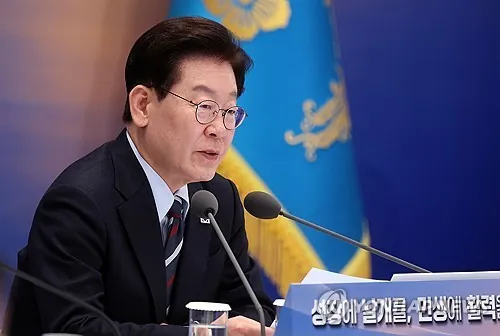
U.S. President Donald Trump announced on September 30, 2026 that Alaska liquefied natural gas (LNG) development — part of a South Korean investment package in the United States — had been finalized, a move analysts say was driven more by midterm election politics than by any completed deal.
What happened
With U.S.-Iran war-driven oil prices pushing Alaska gasoline above $9 per gallon, Trump’s Republican Party faces an unexpected fight in Alaska — historically a safe red state. A poll released September 17 showed Democratic Senate candidate Mary Peltola leading incumbent Republican Senator Dan Sullivan 46% to 41%. Trump has won Alaska by double-digit margins in each of the past three presidential elections.
To shore up sentiment, Trump claimed the Alaska LNG project would cut household energy costs in the state by “$1,500 to $2,200 per year.” Commerce Secretary Howard Lutnick (spelling per original: “Rutnick”) added that eight large nuclear power plants — to be built with South Korean investment — would be sited in Ohio, Tennessee, South Carolina, and Kentucky. Both announcements were framed as done deals, though neither has been formally finalized. John Russell, a partner at Washington strategy firm DGA Group, told Kyunghyang Shinmun that “nothing can beat oil prices that high” and that the project announcement is unlikely to reverse public sentiment.
Why Korea does it this way
Korea imports virtually all of its oil and natural gas, making it one of the world’s most energy-import-dependent economies. LNG prices in Asia are benchmarked partly against U.S. Henry Hub prices and partly against oil-linked contracts, so any sustained spike in global crude — like the one driven by the U.S.-Iran conflict — flows quickly into Korea’s LNG import invoices. The government uses two main levers to cushion households: adjustments to the fuel tax (교통·에너지·환경세, a per-litre excise on gasoline and diesel), and regulated utility tariffs set by the Korea Energy Agency and KEPCO (Korea Electric Power Corporation, the state utility monopoly). Both levers have been used repeatedly since the 2022 energy crisis.
What it means for you
Households and commuters: If the U.S.-Iran conflict keeps Brent crude elevated, Korea’s Ministry of Trade, Industry and Energy typically responds by extending fuel tax cuts — check the current cut rate at the Ministry of Trade, Industry and Energy (산업통상자원부) website, as the figure changes by decree. Each 10-won-per-litre cut in the gasoline tax saves a driver filling a 50-litre tank roughly 500 won per fill-up.
Utility bill payers: KEPCO adjusts electricity tariffs quarterly via the Climate and Environment Charge mechanism. A prolonged oil-price surge raises the probability of an upward tariff revision in Q1 2027 (the next scheduled review window). Check the current tariff level at kepco.co.kr before budgeting.
Investors in Korean energy and utilities: KEPCO (015760.KS) and Korea Gas Corporation — KOGAS (036460.KS) — are the listed entities most directly exposed to LNG import cost swings. Both carry regulated-tariff risk: if the government suppresses retail prices to protect households, the gap hits corporate margins. No investment advice is given here; check each company’s latest disclosure for current hedging positions.
Foreign residents: Gas and electricity bills for expat households follow the same KEPCO tariff schedule as Korean households. If you are on a jeonse (전세, a large lump-sum deposit paid instead of monthly rent) arrangement, your landlord typically pays utilities separately — confirm your contract terms.
Alaska LNG timeline: If the project does move forward with Korean financing, it would be a multi-year construction story — no LNG volumes would reach Korea before the early 2030s at the earliest, so near-term import cost relief is not a realistic scenario from this announcement alone.
Watch next
- U.S. midterm elections — November 2026: The Alaska Senate race (Peltola vs. Sullivan) is now a bellwether for whether oil-price anger has shifted a Republican stronghold. A Democratic win would increase pressure on the Trump administration to negotiate a ceasefire or oil-market intervention, which could ease global crude prices and Korea’s import costs.
- Korea fuel tax decree — watch for gazette notice (관보) by end-October 2026: The current fuel tax cut is set by presidential decree and renewed in roughly three-month cycles. If no renewal notice appears before November 1, 2026, the cut expires and pump prices rise automatically.
- KEPCO Q1 2027 tariff review — decision expected January 2027: If Brent crude averages above check the current threshold at kepco.co.kr through Q4 2026, KEPCO is likely to apply for an upward tariff adjustment. The Korea Energy Regulatory Commission must approve any change before it takes effect.
Confidence: The political and polling facts are sourced from a single outlet (Kyunghyang Shinmun); the Alaska LNG finalization claim has not been independently confirmed by U.S. government filings as of publication. Treat the investment announcement as a political statement pending formal documentation.
Source: The Kyunghyang Shinmun (경향신문)
Was this useful?
What made the difference? Pick one.
What made the difference? Pick one.
Thanks. We read every answer.