AI tools that swap real people into existing videos with a single click are racking up tens of millions of views — and South Korea’s government is responding with its first criminal-penalty law targeting unauthorised “digital replicas.”
What happened
A tool called Genjutsu, released in late August 2026 by US startup Hixfield, lets anyone upload up to 30 seconds of video plus a few photos, choose a swap function, and receive a finished clip with no further prompting. A 15-second result costs about US$5.20. The tool preserves the original choreography, camera movement, and staging while replacing the person, costume, and background.
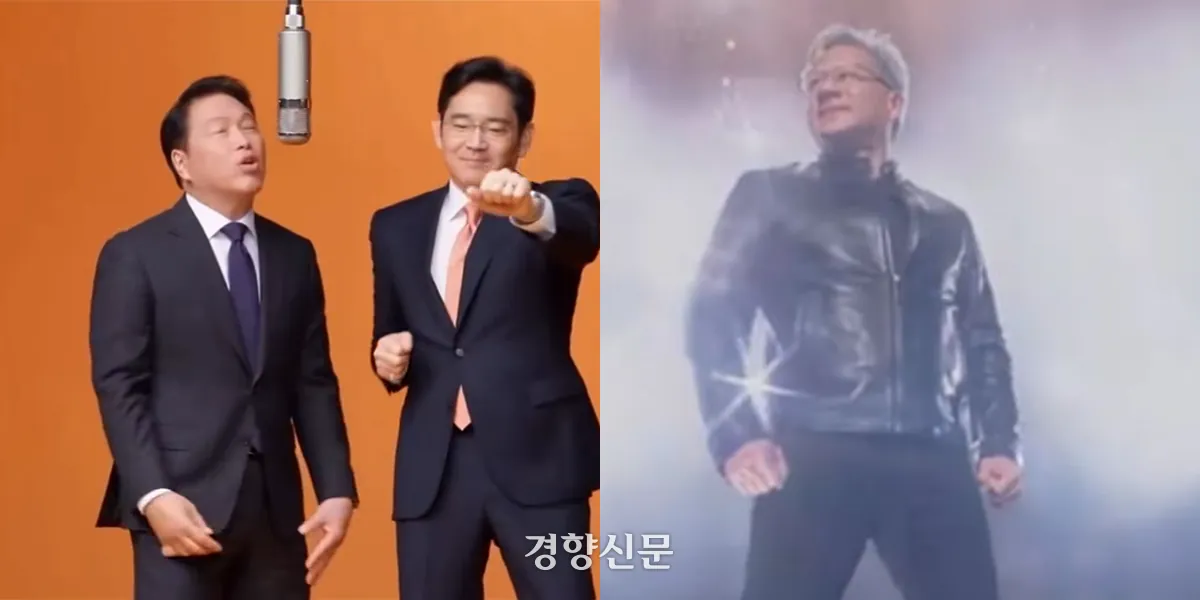
Clips made with the tool have gone viral in Korea and abroad. A video placing Samsung Electronics Chairman Lee Jae-yong and SK Group Chairman Chey Tae-won into a girl-group (K-pop idol group) dance challenge for the new A2O LITE song Neon surpassed 8 million views. A version by broadcaster Jung Joon-ha reached 3.33 million views. Internationally, a clip turning Nvidia CEO Jensen Huang into Michael Jackson drew roughly 5.97 million views on Bilibili (a Chinese video platform) alone as of October 23; even Tesla CEO Elon Musk shared it, joking, “So this is why memory prices are so high.”
On October 14, 2026, South Korea’s Intellectual Property Office (특허청, the national patent and IP regulator) announced plans to amend the Unfair Competition Prevention Act (부정경쟁방지법, a broad law that covers commercial misappropriation of third-party assets) to explicitly include “digital replicas” — AI-generated likenesses of real people — and to attach criminal penalties for unauthorised commercial use.
Why Korea does it this way
Korea has no single “right of publicity” statute like some US states; protection for personal likeness has historically been pieced together from civil law and the Unfair Competition Prevention Act. The Act was already amended in 2021 to cover unauthorised use of a person’s name, portrait, voice, or character for commercial gain, but those provisions carried only civil remedies, not criminal ones. The new proposal would add a prosecutable offence — a significant escalation driven partly by a high-profile August 2026 incident in which broadcaster Lee Ji-hye’s face was used without consent in a fake product endorsement video.
What it means for you
Creators and marketers currently face only civil liability for unauthorised likeness use; if the amendment passes, commercial use without consent could become a criminal matter — watch for the bill’s text and its definition of “commercial use” to understand where the line falls.
Businesses and advertisers in Korea that use AI-generated spokesperson content should conduct a compliance review now. The Intellectual Property Office Commissioner stated that “effective enforcement” is the key to solving the digital replica problem, signalling active intent to prosecute once the law passes.
Foreign residents and expats posting AI-composited memes for fun are unlikely to be the primary target — the proposal focuses on commercial unauthorised use — but the boundary between viral content and commercial promotion (influencer posts, sponsored content) can be blurry.
Investors in Korean content and entertainment stocks (listed on KOSPI/KOSDAQ) should note that clearer IP enforcement could reduce the risk of brand dilution for talent agencies and broadcasters, but the law’s scope is not yet settled.
Original content creators: French director Romain Gavras, whose music video Storm was widely cloned, said he “felt sad thinking of everyone who poured enormous effort into the video” and warned such trends “can make even good works look trivial.” Copyright protection for the underlying choreography and cinematography is a separate unresolved question from portrait rights.
Watch next
- The Intellectual Property Office has not yet set a legislative timetable for the Unfair Competition Prevention Act amendment — watch for the bill to be submitted to the National Assembly (국회, South Korea’s parliament); the next regular session runs through December 9, 2026.
- Monitor whether Hixfield or similar platforms introduce geographic restrictions or age-verification in response to Korean regulatory pressure — a policy announcement from the company would be the trigger.
- If the amendment passes, watch for the first criminal prosecution under the new digital-replica provision, which would set the precedent for what “unauthorised commercial use” means in practice.
FAQ
Is it illegal to make an AI video swap using someone’s face in South Korea right now?
As of October 24, 2026, unauthorised commercial use of someone’s likeness can trigger civil liability under the existing Unfair Competition Prevention Act, but it is not yet a criminal offence — the proposed amendment that would add criminal penalties has not been passed into law.
What does the Genjutsu AI video tool cost and how does it work?
Genjutsu, made by Hixfield, costs about US$5.20 for a 15-second clip; you upload up to 30 seconds of source footage and photos of the target person, select a function, and the tool outputs the swapped video with no additional prompting required.
Source: The Kyunghyang Shinmun (경향신문)
Was this useful?
What made the difference? Pick one.
What made the difference? Pick one.
Thanks. We read every answer.