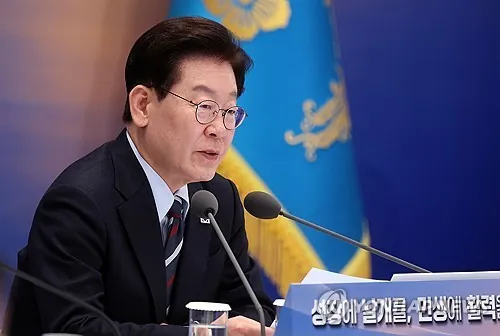
South Korea’s President Lee Jae-myung is ramping up his social media presence and community visits, but critics — including voices inside his own ruling coalition — question whether the outreach is driving real policy results or consolidating factional power.
What happened
On or around October 12, 2026, President Lee announced plans to post more frequently on social media and to visit neglected neighborhoods to hear from marginalised citizens. Lee cited Mexican President Claudia Sheinbaum’s schedule — four press conferences a week plus three days of community visits — as his model. The announcement came after Lee’s recent state visit to Mexico. Lee said he would accept dissenting opinions but block abusive comments. Notably, pushback on his posts is reportedly coming not from conservatives but from progressive hard-liners inside the ruling camp demanding faster prosecutorial reform. Lee’s rhetoric targeting officials who “enjoy luxury at taxpayers’ expense while cutting welfare budgets” has been read by observers as a veiled message aimed at those same hard-liners, fuelling speculation that the expanded social media activity is as much about internal coalition management as public outreach.
Why Korea does it this way
South Korea’s president serves a single, non-renewable five-year term and holds concentrated executive power over the cabinet and economic policy. Because there is no re-election incentive, presidents often face growing intra-party resistance mid-term as factions position for the next cycle. Direct public communication — through social media or town visits — is a tool presidents have used to maintain popular legitimacy and outflank internal rivals. Lee’s Democratic Party currently holds a legislative majority, meaning policy friction is more likely to come from within his own coalition than from the opposition.
The jeonse (a large lump-sum deposit paid by a tenant instead of monthly rent, which the landlord invests and returns at lease end) system is unique to Korea and makes housing policy unusually sensitive: changes to property taxes alter landlords’ incentives and can quickly shrink the supply of jeonse contracts available to renters.
What it means for you
Renters: The article states that Lee’s regulation-focused property tax reforms — targeting owners of extremely expensive apartments — have already contributed to a jeonse supply shortage. Fewer jeonse contracts on the market means higher deposit demands for the contracts that remain. If you are hunting for jeonse housing in late 2026, expect a tighter pool and upward pressure on deposit sizes; check the current jeonse-to-sale-price ratio at the Korea Real Estate Board (Rebiz) before signing.
Foreign residents and expats: If you rent on a monthly (wolse) basis rather than jeonse, a jeonse shortage indirectly pushes some landlords toward wolse arrangements, which can increase monthly rents. No specific figure is given in this report — monitor the Korea Real Estate Board’s monthly rental index for your district.
Investors and Korea-watchers: The article does not announce a specific rate decision, fiscal measure, or regulatory change with an implementation date. The signal to track is whether Lee’s communication drive translates into concrete legislative action — particularly on property tax thresholds and prosecutorial reform — both of which are contested within the ruling coalition. No investment action is warranted on this report alone.
Workers and welfare recipients: Lee’s public statements single out welfare budget cuts as politically unacceptable. This suggests the administration is unlikely to pursue austerity on social spending in the near term, though no budget figures are confirmed in this article — check the current figure at the Ministry of Economy and Finance’s budget portal.
Watch next
- Korea’s National Assembly budget deliberations for fiscal year 2027 begin in earnest in October 2026; watch for whether welfare and housing line items are protected or trimmed — the Finance Committee schedule is published on the National Assembly website (assembly.go.kr).
- The Korea Real Estate Board releases its weekly jeonse price index every Thursday; if the jeonse supply index falls for three consecutive weeks after this announcement, the policy reform is tightening the market as critics warn.
- Watch for a ruling Democratic Party floor vote on prosecutorial reform legislation — date not yet set, to be decided by the party leadership; passage or failure will clarify whether Lee’s intra-coalition messaging has succeeded.
FAQ
What is jeonse and why is it affected by property tax reform in Korea?
Jeonse is a uniquely Korean rental system where a tenant pays a large lump-sum deposit — instead of monthly rent — which the landlord holds and invests, then returns in full at lease end. When property taxes on expensive apartments rise, landlords’ carrying costs increase, which can make jeonse arrangements less financially attractive for them, shrinking supply and pushing up deposit sizes for the remaining contracts.
Is President Lee Jae-myung’s social media expansion a new government policy?
It is a presidential communication decision, not a formal government policy with legal force. Lee announced more frequent social media posts and community visits, modelled on Mexico’s president, but the article notes critics — including within his own ruling coalition — question whether it will translate into tangible policy outcomes rather than serving factional political purposes.
Source: Yonhap News Agency / Korea JoongAng Daily editorial
Was this useful?
What made the difference? Pick one.
What made the difference? Pick one.
Thanks. We read every answer.