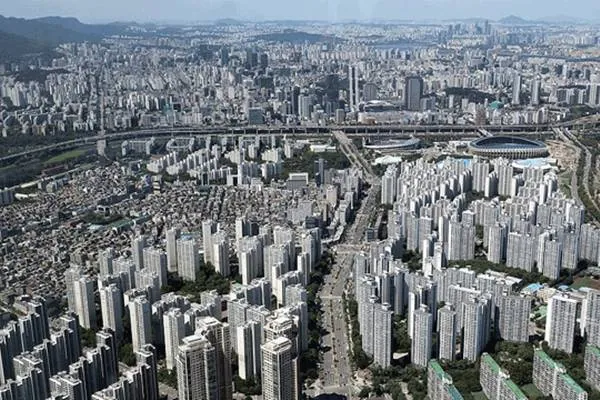
Seoul apartment prices climbed again in the first week of October 2026, extending an unbroken run of weekly gains to 87 consecutive weeks — a streak that now stands as a record in modern Korean real estate history.
What happened
According to data published on Thursday, 8 October 2026 by the Korea Real Estate Board (한국부동산원, the government agency that tracks property prices nationwide), the average apartment price in Seoul rose 0.12% week-on-week in the first week of October. That is an acceleration from the prior week’s pace, pushing the streak of consecutive weekly gains to 87 weeks — the longest recorded run of uninterrupted gains in the dataset’s history. The Korea Real Estate Board releases this index weekly; it covers apartment transactions and listings across Seoul’s 25 districts (gu).
Why Korea does it this way
Seoul’s housing market sits inside one of the world’s most concentrated urban economies: roughly half of South Korea’s population and the majority of its white-collar jobs are clustered in the Seoul Capital Area. Because supply of new apartments in desirable inner-city districts is tightly constrained by zoning, redevelopment timelines of a decade or more, and high land costs, price pressure accumulates rather than dissipates. Korea also has a unique rental system called jeonse (a large lump-sum deposit paid instead of monthly rent — typically 60–80% of the apartment’s purchase price — which the landlord uses interest-free and returns at the end of a 2-year lease). When apartment prices rise, jeonse deposits rise in tandem, meaning renters must either raise more upfront cash or shift to monthly-rent contracts. Government efforts to cool the market — loan-to-value caps, acquisition taxes, and designation of “speculative zones” — have historically had temporary effects because underlying demand in Seoul remains structurally larger than supply.
What it means for you
Mortgage borrowers: Rising prices lift the collateral value of existing loans but also mean new buyers must borrow more. Variable-rate mortgage holders should check the current benchmark rate at the Bank of Korea (bok.or.kr); the article does not state the current policy rate, so check the current figure at the Bank of Korea before calculating monthly payment changes. A 0.12% weekly gain compounds quickly: at that pace a 500-million-won (₩500m) apartment would add roughly ₩600,000 in paper value in a single week.
Jeonse tenants: As purchase prices rise, landlords typically adjust jeonse deposit demands upward at renewal — often by 5–10% in a rising market. Tenants whose 2-year jeonse contracts expire in late 2026 or early 2027 should expect renegotiation pressure. A ₩400m jeonse deposit rising 5% at renewal means finding an extra ₩20m in cash.
Renters on monthly contracts (wolse): Landlords may convert jeonse units to wolse (monthly rent) when interest rates make holding large deposits less attractive, tightening the supply of jeonse units and pushing up monthly rents simultaneously.
Foreign residents and expats: Housing allowances negotiated in 2024–2025 contracts may no longer cover current jeonse or monthly-rent levels in central Seoul districts. Renegotiate allowances before the next lease renewal.
Investors: Seoul residential property is not directly investable via a single listed vehicle for most foreign investors, but real estate investment trusts (REITs) listed on the Korea Exchange (KRX) with Seoul residential exposure reflect this trend; check current KRX REIT listings for exposure details — no specific REIT is endorsed here.
Watch next
- Korea Real Estate Board weekly index, mid-October 2026: Watch whether the week-2 October reading accelerates above 0.12% or cools — a second consecutive acceleration would signal broadening momentum beyond Seoul’s core districts. The Board publishes every Thursday.
- Bank of Korea Monetary Policy Board meeting (next scheduled date — check bok.or.kr for the exact date): Any change to the benchmark rate triggers immediate repricing of variable mortgages and shifts the jeonse-vs-purchase-price calculus. Trigger: a rate cut of 0.25%p or more would likely add further upward pressure on apartment prices.
- Government housing supply announcement: The Ministry of Land, Infrastructure and Transport (MOLIT) periodically announces new apartment supply plans for the Seoul Capital Area. Watch for any revision to the 3rd New Town (3기 신도시) delivery schedule — delays have historically correlated with price spikes in existing Seoul stock.
FAQ
Why have Seoul apartment prices risen for 87 consecutive weeks?
The Korea Real Estate Board confirmed a 0.12% week-on-week rise in early October 2026, extending the streak to 87 weeks; structural factors include limited inner-Seoul supply and concentrated demand, but the article does not detail the specific drivers behind the current streak’s length.
What is jeonse and how does it work in a rising Seoul housing market?
Jeonse is Korea’s lump-sum deposit rental system, where a tenant pays a large deposit — often 60–80% of the apartment’s value — instead of monthly rent, receiving the full amount back at lease end; as purchase prices rise, jeonse deposits rise too, increasing the cash burden on renters at renewal.
Source: KBS World Radio
Was this useful?
What made the difference? Pick one.
What made the difference? Pick one.
Thanks. We read every answer.