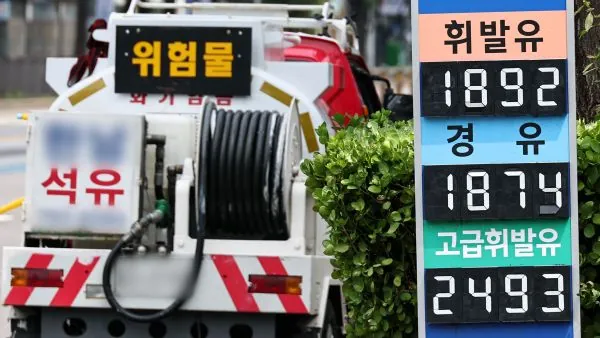
South Korea’s Fair Trade Commission (FTC — the government body that enforces competition law) has formally moved to review whether SK Energy and Hyundai Oilbank colluded to fix fuel prices in the wake of the Iran war, a case that could ripple through petrol prices paid by every driver and household in the country.
What happened
The FTC’s secretariat presented a report to the full commission on Wednesday, October 7, 2026, recommending a review of alleged price-fixing by SK Energy and Hyundai Oilbank. Together, the two companies account for roughly half of South Korea’s domestic oil refining capacity. The allegation is that the pair coordinated fuel prices after the outbreak of the Iran war — a conflict that sent crude benchmarks sharply higher and created cover for domestic pricing decisions that regulators now want to scrutinise. No fines or orders have been issued yet; the presentation to the commission is the formal trigger that begins the review process.
Why Korea does it this way
South Korea imports virtually all of its crude oil, so domestic fuel prices are determined by a small number of large refiners — SK Energy, Hyundai Oilbank, S-Oil, and GS Caltex — whose combined grip on the market makes them natural targets for competition oversight. The FTC has broad authority under the Monopoly Regulation and Fair Trade Act to investigate companies that it suspects of jointly fixing prices, and presenting a case to the full commission is the standard procedural step that opens a formal inquiry. Korea has a history of refiner price-coordination investigations, particularly during crude price spikes, because consumers have little ability to shop around when wholesale supply is concentrated.
What it means for you
This is an early-stage regulatory review, not a concluded ruling, so no immediate change to pump prices follows today’s announcement. However, the people most directly affected are:
- Drivers and households: If the FTC finds evidence of collusion and orders a remedy, it could result in refunds, price rollbacks, or forced structural changes — but any relief is likely at least several months away, given that FTC investigations typically run 6–18 months before a final decision.
- Small businesses and logistics operators: Fuel is a major operating cost for delivery, trucking, and manufacturing. Companies that purchased diesel or petrol from SK Energy or Hyundai Oilbank during the alleged collusion period may eventually be eligible for damages claims if the FTC finds a violation.
- Foreign residents: Expats driving in Korea or paying utility bills that include petroleum-derived energy costs are indirectly exposed; watch whether pump prices begin to moderate as the probe creates reputational pressure on the two firms even before a verdict.
- Investors in SK Innovation (SK Energy’s listed parent) and Hyundai Oilbank’s group: A confirmed finding of price-fixing can carry fines of up to 10% of relevant revenues under Korean competition law — a material risk for shareholders to monitor. No figure has been set in this case; check the FTC’s official announcements for updates.
FAQ
Did SK Energy and Hyundai Oilbank actually fix fuel prices in Korea?
No finding has been made yet — as of October 7, 2026, the FTC secretariat has only presented a recommendation to open a formal review; the companies are under investigation, not convicted, and a final ruling has not been issued.
What happens next in the FTC price-fixing review of SK Energy and Hyundai Oilbank?
The full FTC commission will decide whether to proceed with a formal investigation; if it does, the companies will be notified, given a chance to respond, and a hearing will be scheduled — a process that typically takes many months before any penalty or clearance is announced.
Watch next
- FTC commission vote on opening a formal investigation — date not yet set; decided by the full FTC commission after Wednesday’s secretariat presentation. Watch the FTC’s official press releases at ftc.go.kr for the announcement.
- Monthly consumer price index (CPI) release by Statistics Korea — published around the 5th of each month; if the petroleum products sub-index remains elevated while the probe is live, political pressure on the FTC to act quickly will intensify.
- Iran war ceasefire or escalation signal — crude import costs are the underlying variable; if Brent crude drops back below the level that prevailed before the Iran conflict began, the case for consumer harm from domestic price-fixing becomes easier for the FTC to quantify.
Source: KBS World Radio
Was this useful?
What made the difference? Pick one.
What made the difference? Pick one.
Thanks. We read every answer.