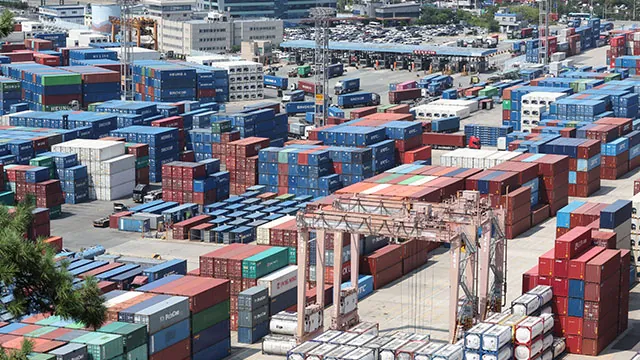
South Korea’s export tally for just the first 20 days of September 2026 crossed US$70 billion for the first time on record, driven by a near-80% surge in semiconductor shipments.
What happened
Provisional data released Monday (September 21, 2026) by the Korea Customs Service (KCS) — the government agency that tracks cross-border trade in real time — showed that South Korea’s exports during September 1–20 jumped roughly 78% year-on-year, surpassing US$70 billion for the first time ever in a comparable 20-day window. The primary engine was semiconductors, which have been on a sustained upswing in global demand. KCS releases these preliminary 20-day figures at the end of each month’s third week as an early pulse-check ahead of the official monthly total published by the Ministry of Trade, Industry and Energy (MOTIE) on the first day of the following month.
Why Korea does it this way
Exports account for roughly 40% of South Korea’s GDP, making the country one of the world’s most trade-dependent large economies. Semiconductors — primarily DRAM memory chips and NAND flash made by Samsung Electronics and SK Hynix — have historically been Korea’s single largest export category, meaning global chip-demand cycles translate almost directly into Korean growth and government tax revenue. Because monthly trade data moves markets and informs central bank decisions, KCS publishes a preliminary 20-day snapshot to give businesses, investors and policymakers an early read without waiting a full month.
What it means for you
Investors in Korean equities: Samsung Electronics (005930.KS) and SK Hynix (000660.KS) together carry substantial weight in the KOSPI index (Korea’s main stock benchmark, roughly equivalent to the S&P 500). A near-80% export surge signals strong order books heading into Q4 2026. These are factual observations about listed companies — not investment advice.
Workers and the broader economy: Semiconductor fabs and their component suppliers employ hundreds of thousands in the greater Seoul metropolitan area and in Icheon and Hwaseong. A sustained export boom typically supports hiring and wage growth in those clusters.
Foreign residents and expats: Strong export data tends to support the Korean won (KRW). If the won strengthens against the US dollar or euro, your home-currency remittances or rent payments denominated in won become relatively cheaper in foreign-currency terms. Watch the USD/KRW rate for movement in the days after this release.
Savers and borrowers: Robust export growth adds upward pressure on GDP, which may influence the Bank of Korea (BOK) — Korea’s central bank — when it next sets the benchmark policy rate. Check the current rate at bok.or.kr; a stronger growth outlook generally reduces the urgency for rate cuts.
Supply chain participants: The semiconductor boom benefits upstream suppliers of wafer materials, chemicals and equipment, many of which are listed on KOSDAQ (Korea’s secondary exchange for smaller and tech-focused companies).
Watch next
- Official September trade data — MOTIE publishes the full monthly export/import figures on October 1, 2026 (first business day of the following month). A confirmed $70B+ monthly total would be a record and could move the won and Korean equities.
- Bank of Korea Monetary Policy Board meeting — Date not yet set for October; decided by the BOK Governor’s office and published on the BOK website. If September’s full trade data confirms the export surge, watch whether the board signals a hold or adjustment to the policy rate.
- US and China tariff developments — Korea’s semiconductor exports flow heavily through US and China end-markets. Any tariff threshold change on chips (e.g., if US tariffs on Chinese-bound semiconductors shift above current levels) would directly affect Korean shipment volumes. Monitor USTR announcements and China’s Ministry of Commerce for specific dates and rate thresholds.
Source: KBS World Radio
Was this useful?
What made the difference? Pick one.
What made the difference? Pick one.
Thanks. We read every answer.



