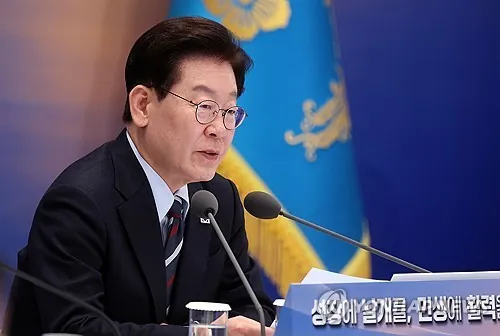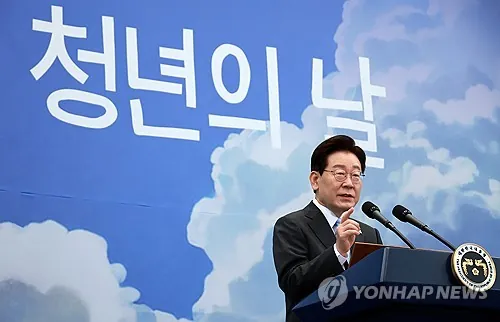
President Lee Jae Myung said on September 19, 2026, that he is considering establishing a dedicated government body to oversee youth policies, citing a worsening job market for young Koreans and the disruptive effects of AI-driven industrial restructuring.
What happened
Speaking at a ceremony to mark Youth Day at the presidential office (Cheong Wa Dae (청와대), the former Blue House complex in central Seoul now used for public events), President Lee said current policymakers lack the capacity to handle what he called an “emergency situation” for young people. He pointed to growing polarization and rapid industrial restructuring driven by artificial intelligence as forces shrinking opportunities for the new generation. The employment rate for Koreans aged 20 to 24 stood at 41.3 percent in the second quarter of 2026, down from a 2025 annual average of 43.6 percent, according to government data. No legislation or formal proposal has been submitted; Lee described the idea as something he is “considering.”
Why Korea does it this way
Korea has long relied on its Ministry of Employment and Labor and the Ministry of Gender Equality and Family to handle youth issues, but critics argue these mandates are too fragmented to respond quickly to structural shocks. Youth unemployment has been a persistent political flashpoint in Korea for over a decade, with each administration facing pressure to show visible institutional commitment. Creating a standalone agency — similar to how Korea set up dedicated bodies for issues like population decline — is a well-established political playbook for signaling prioritization. A dedicated body would consolidate budget authority and policy coordination in one place, potentially speeding up responses to labor market shifts.
What it means for you
Young job seekers and workers: If a new agency is established, it could consolidate job training, employment subsidies, and career support programs currently scattered across multiple ministries. With the 20–24 age group’s employment rate at 41.3 percent in Q2 2026 — meaning fewer than half of that age cohort are employed — any structural consolidation of youth employment programs is directly relevant. However, nothing is decided yet; a new agency would first require legislation passing the National Assembly (Korea’s unicameral parliament).
Foreign residents and expats: Expats working in Korea, particularly those on E-series work visas, compete in the same labor market. A tighter youth job market often signals that entry-level and mid-skill roles are scarce across the board, which can affect hiring timelines and visa renewal conditions tied to employment.
Investors: AI-driven restructuring is named as a direct cause of the youth employment squeeze. This framing suggests future policy may direct government procurement and subsidies toward sectors perceived as displacing workers — such as automation and AI — or toward retraining industries. Check current policy incentive frameworks at the Ministry of Trade, Industry and Energy for the latest figures on sector-level support.
Politics → policy → household money: If Lee’s proposal advances, a new agency would likely control a consolidated youth budget. Increased government spending on youth employment programs could modestly expand public-sector job opportunities and subsidized private-sector hiring, which affects household income for families with young adult members.
Watch next
- National Assembly session: Any legislation to create a new government agency must pass the National Assembly. The regular session opens in September 2026 — watch for a formal bill submission date, which has not yet been announced. Track the National Assembly’s legislative agenda at assembly.go.kr.
- Q3 2026 youth employment data: Statistics Korea (통계청, the national statistics agency) releases monthly employment figures; the Q3 2026 summary is due in late October 2026. A further drop below 41.3 percent would increase legislative pressure to act quickly.
- Presidential follow-up announcement: Lee framed this as a consideration, not a decision. Watch for a formal policy announcement from the presidential office — date not yet set, to be decided by the president’s policy coordination office.
Source: Yonhap News Agency
Was this useful?
What made the difference? Pick one.
What made the difference? Pick one.
Thanks. We read every answer.