South Korea’s top financial officials held an emergency coordination meeting on September 17, 2026, after the U.S. Federal Reserve raised its benchmark interest rate by 0.25 percentage points — the Fed’s first hike in more than three years — and concluded that the move will have a limited impact on Korean financial markets because it was already priced in.
What happened
Overnight on September 16–17, 2026, the Fed lifted its target federal funds rate by 25 basis points (0.25 percentage points), bringing the target range to 3.75–4.00 percent — its first increase since July 2023. The Fed also signalled that another hike later in 2026 is possible, citing persistent inflation and rising oil prices.
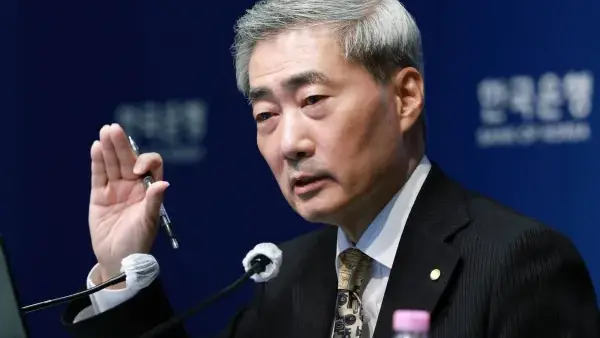
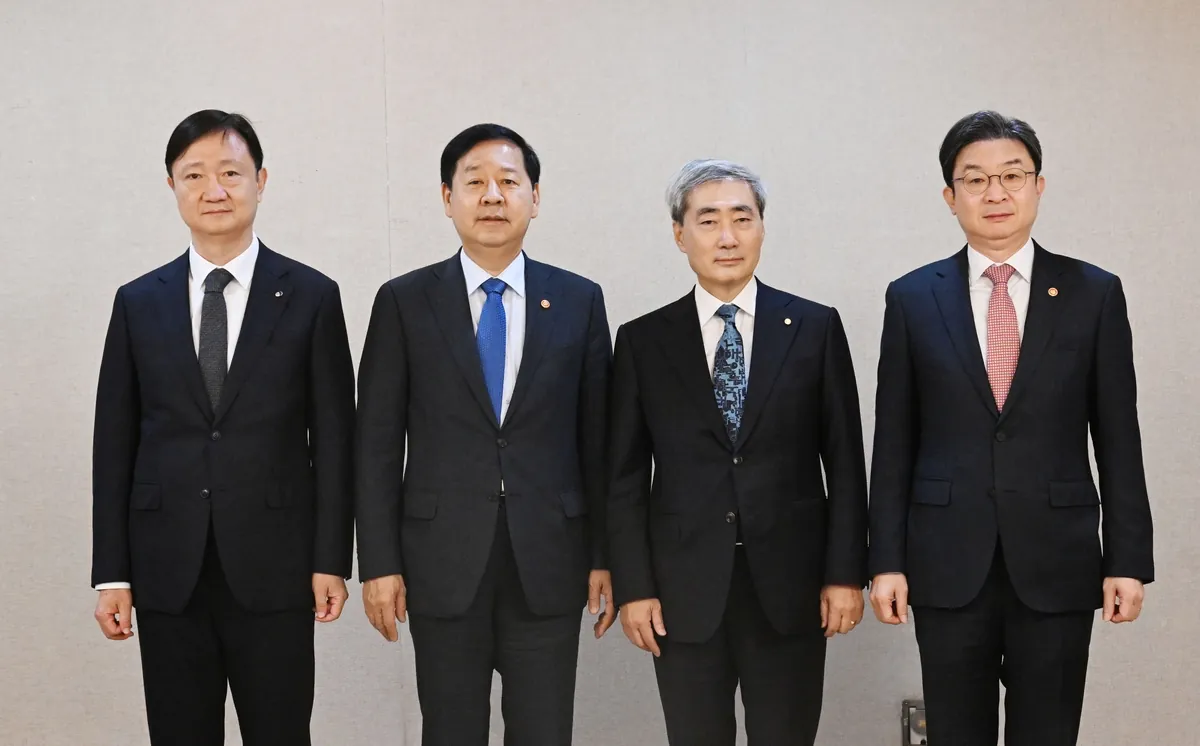
In response, Finance Minister Koo Yun-cheol convened a joint crisis-monitoring meeting in Seoul attended by Bank of Korea (BOK) (South Korea’s central bank) Governor Shin Hyun-song, Financial Services Commission (FSC) Chairman Lee Eog-weon, and Financial Supervisory Service (FSS) Governor Lee Chan-jin. The group assessed that markets had already absorbed the expected hike and agreed to deploy stabilisation measures if volatility — particularly in the government bond market — rises further.
Why Korea does it this way
South Korea runs an open capital account, meaning money can flow in and out of the country freely. When U.S. rates rise relative to Korean rates, international investors may pull funds out of Korean assets to chase higher dollar yields, putting downward pressure on the Korean won (South Korea’s currency, symbol ₩) and pushing up domestic borrowing costs — even before the BOK moves its own policy rate. That dynamic is why Korean financial authorities hold coordinated inter-agency meetings whenever the Fed acts: the FSC sets financial regulation, the FSS supervises banks, the BOK sets rates, and the Finance Ministry controls fiscal policy — four levers that need to move in concert.
Korea’s government bond market is also deeply exposed to global rate swings because foreign investors hold a significant share of Korean Treasury bonds (KTBs). A sudden spike in U.S. yields can trigger rapid outflows and widen the KTB yield spread (the gap between what the government must pay to borrow versus a benchmark), raising funding costs across the economy.
What it means for you
Variable-rate mortgage holders: The immediate pressure comes from market rates, not a BOK rate move — KTB yields and bank funding costs may edge up even if the BOK holds its policy rate steady. To check the BOK’s current base rate, see bok.or.kr. A 0.25 percentage-point rise in your loan’s benchmark rate on a 300 million won mortgage (roughly US$220,000) would add approximately 62,500 won (~US$46) per month to your repayment — check your loan contract to see which benchmark applies.
Savers and depositors: Rising market rates tend to feed through to savings account and time-deposit rates within weeks, so this is modestly positive for people holding cash in Korean banks.
Foreign residents and expats: Won weakness relative to the dollar means your dollar-denominated income buys more won in the short run, but imports — including many foreign foods and consumer goods — become more expensive as the won depreciates. Monitor the USD/KRW rate at any major bank or the BOK website.
Investors in Korean equities: Higher global rates raise the discount rate applied to future earnings, putting downward pressure on valuations — particularly for growth stocks and rate-sensitive sectors such as real estate investment trusts (REITs). The KOSPI (Korea’s main stock index) and KOSDAQ (index for smaller and tech-focused companies) may face short-term headwinds, though officials stressed that the hike was well telegraphed. No specific index moves were reported in this release.
Workers and businesses: If borrowing costs rise and the won weakens, import costs for raw materials increase, squeezing margins for manufacturers. Exporters, however, may benefit from a weaker won making Korean goods cheaper abroad.
Watch next
- Next BOK Monetary Policy Committee meeting: The BOK sets its base rate eight times a year; check bok.or.kr for the next scheduled decision date. A decision to match or diverge from the Fed’s move will directly reset variable mortgage and business loan rates across Korea.
- Next Fed policy meeting (late October/November 2026): The Fed signalled the possibility of another 2026 hike. If the Fed moves again before the BOK responds, the rate differential widens further — watch for a Fed statement confirming or withdrawing that signal.
- Korean government bond (KTB) yields: Authorities specifically flagged rising bond-market volatility. If the 10-year KTB yield rises above its recent range — track it daily via the Korea Financial Investment Association (KOFIA) or Bloomberg — it would signal that the promised stabilisation measures may be activated.
Source: Yonhap News Agency
Was this useful?
What made the difference? Pick one.
What made the difference? Pick one.
Thanks. We read every answer.