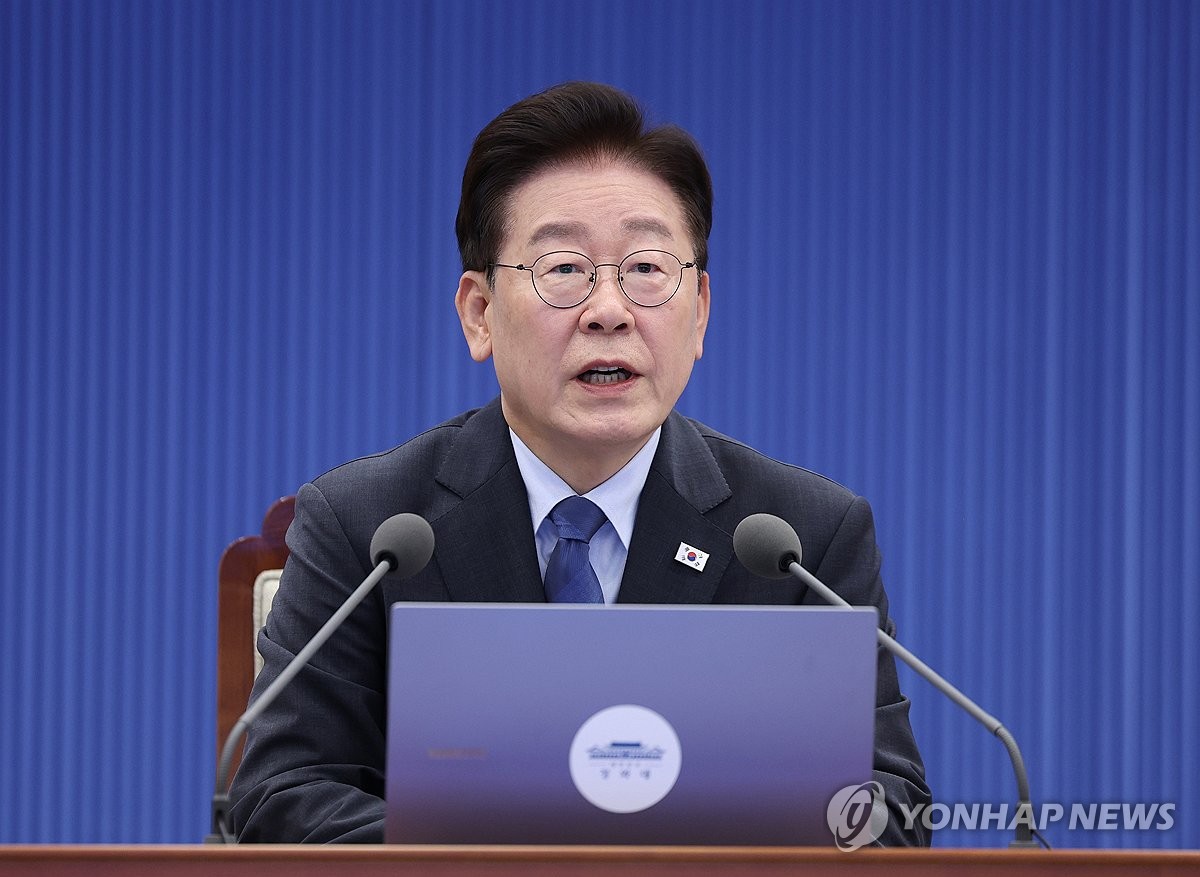
South Korea’s President Lee Jae Myung said Saturday that the government is deploying a full toolkit to keep pump prices in check as global crude oil surged past US$100 per barrel following fresh disruptions in the Middle East.
What happened
On September 12, 2026, President Lee posted on X (formerly Twitter) reassuring the public that oil prices are under control. The trigger: Red Sea shipping disruptions and a Saudi Arabia shutdown of its East-West pipeline — a critical overland oil conduit — after the pipeline came under aerial attack amid widening regional conflict. These events pushed Brent crude back above $100 per barrel. Korea imports nearly all of its oil, making it acutely sensitive to price spikes like this.
Lee cited four active policy tools: (1) oil price caps (government-set ceilings on retail fuel prices); (2) export controls on refined petroleum products to keep domestic supply prioritized; (3) a strategic petroleum reserve (SPR) swap system, where Korea releases stockpiled crude to refiners now and is repaid in oil later; and (4) anti-hoarding and anti-collusion enforcement against fuel distributors. He also said refiners will be compensated for losses caused by government price controls. A key structural shift he highlighted: the Middle East’s share of Korea’s crude imports has already fallen from roughly 70 percent to about 50 percent, as Korea has diversified toward suppliers in the Americas, Africa, and elsewhere.
Why Korea does it this way
Korea has maintained a strategic petroleum reserve system since the 1980s, partly shaped by the trauma of the 1973 and 1979 oil shocks, and is legally required under the Petroleum and Alternative Fuel Business Act to hold a mandatory reserve equivalent to roughly 90 days of net imports. The government has used SPR releases and fuel tax cuts as standard crisis tools in every major oil price spike since then. Import diversification — reducing dependence on any single region — has been a stated policy goal for over a decade, accelerated by repeated Middle East instability. Direct price cap mechanisms give the government short-term control but require compensating refiners, shifting the cost to the public budget rather than to consumers at the pump.
What it means for you
- Drivers and households: The price cap policy is designed to prevent the full $100+ per barrel cost from passing through to petrol stations immediately. If caps hold, retail gasoline prices should rise more slowly than the global crude surge would normally imply — but watch for announcements from the Ministry of Trade, Industry and Energy on the cap level, as any adjustment directly changes what you pay per litre.
- Foreign residents and expats: Heating costs (city gas and district heating) are separately regulated but linked to global LNG (liquefied natural gas) prices, which tend to move with crude. Winter billing cycles starting around November 2026 may reflect current price pressures; check the Korea Energy Agency (KEA) for tariff announcements.
- Investors in Korean equities: Korea’s four major refining and energy companies — including S-Oil and GS Caltex (GS Holdings, listed on KRX) — face a squeeze: government price caps limit their ability to pass on input cost increases, and the compensation mechanism’s scale is not yet publicly detailed. Their margins are directly at risk. For exact index weights in KOSPI energy constituents, check KRX data.
- Small businesses reliant on logistics: Transport and delivery costs — already elevated — face further pressure if the SPR and cap measures prove insufficient. A sustained crude price above $100/bbl historically feeds through to freight surcharges within 4–6 weeks.
Watch next
- Ministry of Trade, Industry and Energy fuel price cap announcement: No specific date set — the Ministry typically issues updates within days of a presidential statement of this kind. A revision to the cap level is the most direct trigger for retail price changes.
- Brent crude vs. $105/bbl threshold: Korea’s SPR release decisions have historically been activated or escalated when Brent sustains above the $100–$105 range for more than two consecutive weeks. If crude holds above $105 through late September 2026, expect a formal SPR release announcement.
- Saudi East-West pipeline status: No restoration date confirmed as of September 12, 2026. Resumption of flow would be the primary signal that the immediate supply shock is easing — monitor Saudi Aramco and IEA press releases.
Source: Yonhap News Agency
Was this useful?
What made the difference? Pick one.
What made the difference? Pick one.
Thanks. We read every answer.



