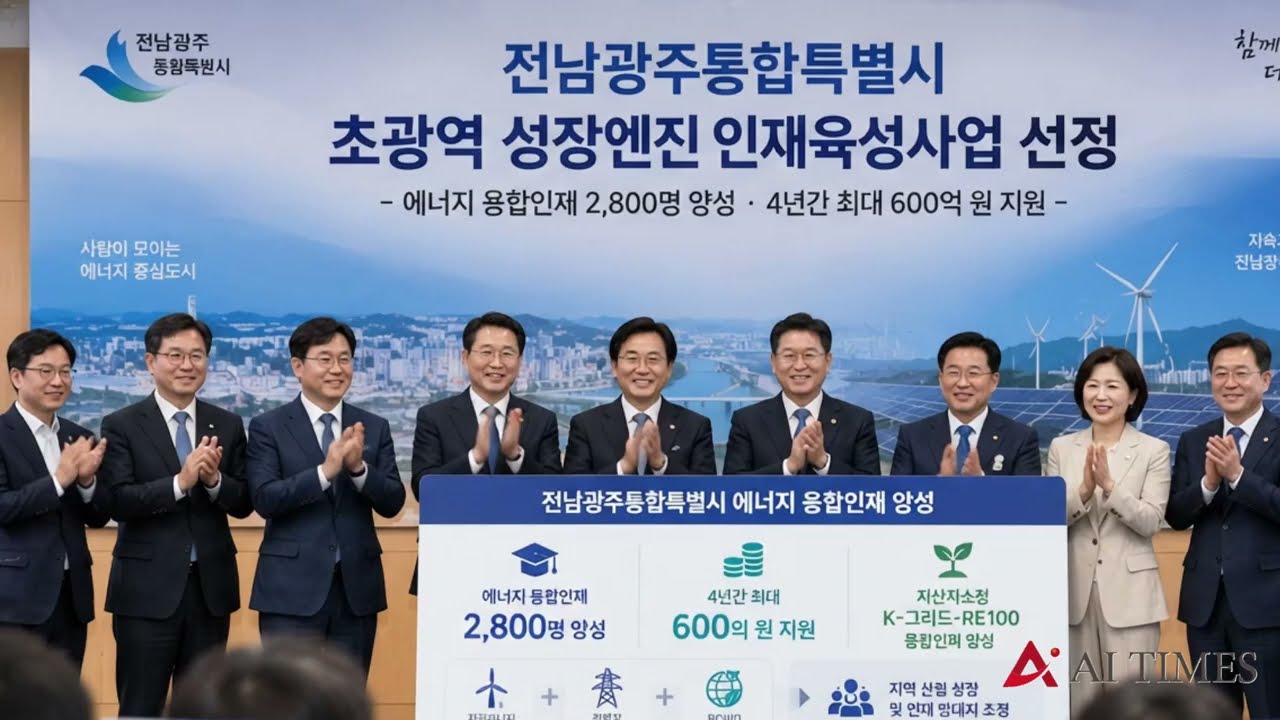
South Korea’s Ministry of Education has selected the Jeonnam–Gwangju (Jeollanam-do province and Gwangju city, which have formed a combined administrative area) region to receive up to ₩60 billion (roughly $43 million) over four years to train 2,800 energy engineers — a direct government response to the country’s worsening gap between power supply skills and industrial electricity demand.
What happened
On 11 September 2026, the Jeonnam–Gwangju Integrated Special City announced it had been chosen as one of six winners from 19 applicants under the Ministry of Education’s Anchor Super-regional Growth Engine Talent Development Project (a competitive grant that pairs local governments, universities and companies to build regionally relevant workforces). The grant pays up to ₩15 billion per year for four years, capped at ₩60 billion total. Mokpo National University will lead the programme, formally titled “Distributed K-Grid and RE100 (RE100 — a global corporate pledge to source 100% of electricity from renewables) Convergence Talent Development Based on Renewable Energy.” Participating institutions agreed on the curriculum after a series of consultations between the Jeonnam–Gwangju Anchor Centre, local universities and industry partners.
Why Korea does it this way
South Korea’s southwest — Jeollanam-do and Gwangju — holds a large share of the country’s installed wind and solar capacity, but grid engineers who can actually manage variable renewable output have historically been trained in Seoul-area universities, leaving the region with an infrastructure-skills mismatch. At the same time, KEPCO (Korea Electric Power Corporation, the state monopoly grid operator) faces congestion on transmission lines feeding the capital region, pushing policymakers to develop distributed grid expertise in the provinces. The Ministry of Education’s Anchor scheme, launched in recent years, is the government’s primary tool for tying university funding to local industrial strategy rather than national ranking tables.
What it means for you
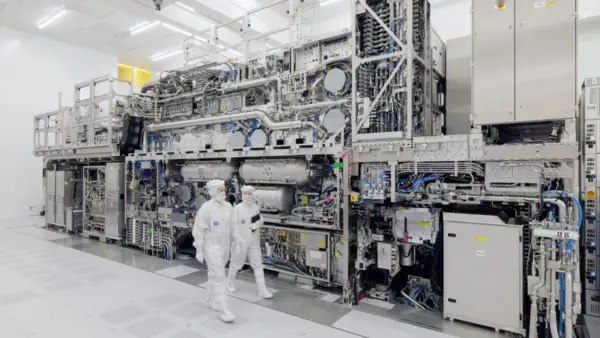
Workers and job-seekers in Jeonnam–Gwangju: 2,800 funded training places will open over the four-year window starting in the 2026–27 academic year, concentrated in power-grid operations, renewable energy systems and RE100 compliance roles — fields linked explicitly to the Honam Semiconductor Megaproject (a large planned chip-manufacturing cluster in the Gwangju–Jeonnam area that will draw substantial grid power).
Residents and electricity consumers: The stated goal is a more stable regional power supply as heavy industry expands. No change to electricity tariffs is announced in this programme; check the current household rate at KEPCO’s website.
Investors: The Honam semiconductor cluster connection signals sustained public investment in the southwest corridor. Listed companies in grid equipment, renewable-energy EPC (engineering, procurement and construction) and power-systems integration that operate in Jeonnam are the segment most directly referenced; this programme is a workforce signal, not a procurement contract. No specific ticker is named in the article.
Foreign residents and expats: This is a regional education grant. It does not affect visa categories, tax rules or daily living costs. Its practical effect on expats would be indirect — over years, a better-supplied regional grid could improve reliability for data centres and industrial parks in the southwest where some multinationals operate.
Watch next
- Mokpo National University’s official curriculum launch — expected in the 2026–27 academic year (exact date not yet set; check Mokpo National University’s announcements for the programme start date).
- Honam Semiconductor Megaproject power-demand milestones: if the cluster’s construction timeline is confirmed by the relevant local government or MOTIE (Ministry of Trade, Industry and Energy), that will set the hard deadline driving grid-engineer hiring in this region.
- Ministry of Education’s next Anchor project review cycle — the ministry selected 6 of 19 proposals in August 2026; watch for any mid-term performance evaluation announcement, typically scheduled 18–24 months after grant award.
Source: AI Times (aitimes.com)
Was this useful?
What made the difference? Pick one.
What made the difference? Pick one.
Thanks. We read every answer.