South Korea’s government picked the only Seoul site in its latest housing supply push without consulting local residents — and on September 11, 2026, about 200 of them showed up to make sure a planned briefing never happened.
What happened
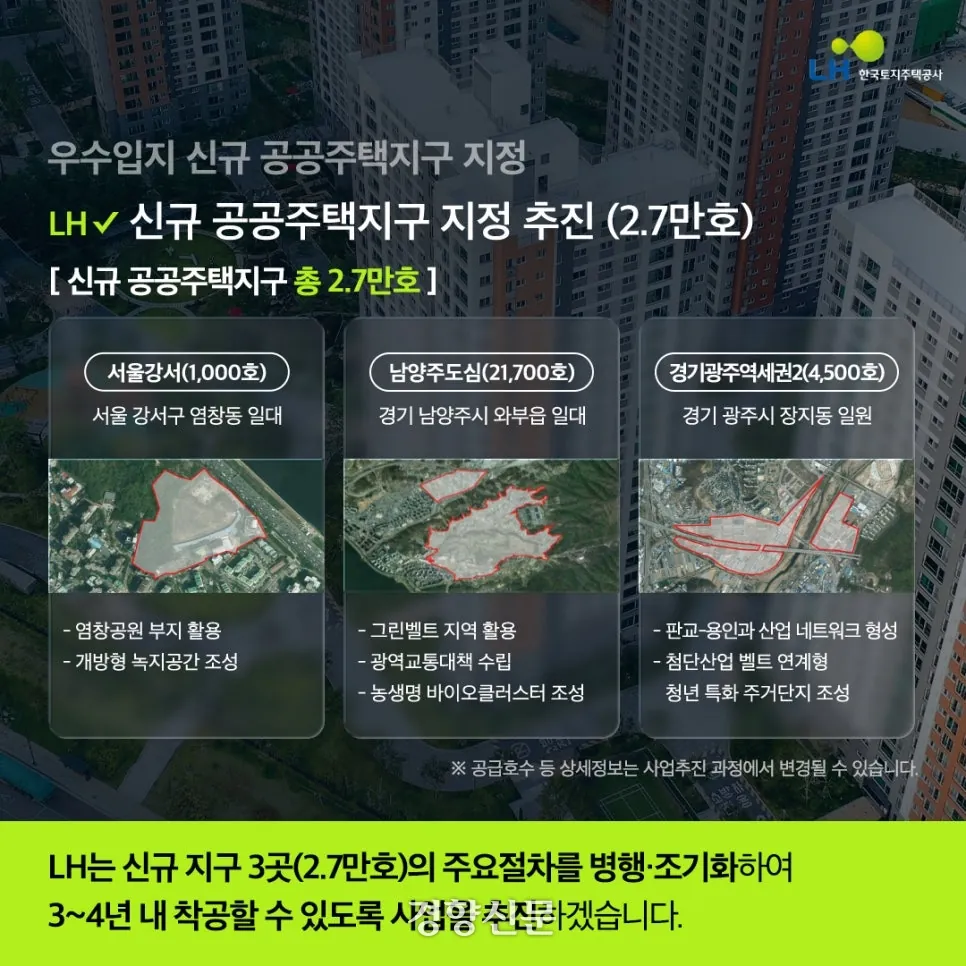
Under the government’s 8·13 housing supply measures (a policy package announced on August 13, 2026 to accelerate residential construction), the Ministry of Land, Infrastructure and Transport designated a damaged section of Yeomchang Neighborhood Park in Gangseo District, western Seoul, as a new public housing district (a nationally designated zone where LH — Korea Land and Housing Corporation, the state developer — builds and manages affordable rental units). It is the only new public housing site in Seoul under the package, targeting 1,000 units with groundbreaking planned for 2029.
Gangseo District scheduled a community briefing for the evening of September 11 at Yeomgyeong Middle School to explain the plan, including traffic mitigation and local infrastructure (SOC) upgrades. Roughly 200 residents blocked the entrance before it could start, chanting “Withdraw it” and “Apologize.” Gangseo District Mayor Jin Gyo-hun and ruling Democratic Party of Korea National Assembly member Han Jeong-ae were both physically prevented from entering the gymnasium. The briefing was canceled.
Why Korea does it this way
Korea’s housing supply policy is highly centralized: the national government — not local governments — designates public housing districts and instructs LH to build on them, often with little prior community engagement. The Yeomchang Park site has been left undeveloped for roughly 20 years despite a promise dating to 1990 to turn it into green space, making residents doubly aggrieved: the land was never made into a park as pledged, and now it is being repurposed for housing they were not consulted about. Seoul apartment prices dominate Korea’s political debate, and governments routinely announce supply targets in multi-site packages under time pressure, which can leave site-specific consultation as an afterthought.
What it means for you
This is a local planning dispute in one Seoul district; it does not directly change loan limits, tax thresholds, or rental markets across Korea. However, it illustrates a recurring friction point that can affect timelines for anyone tracking Korea’s housing supply pipeline:
- Prospective renters and buyers near Gangseo: The 1,000 units targeted for Yeomchang-dong now face an uncertain timeline — if the designation is revised or withdrawn, the 2029 groundbreaking date slips, keeping local supply tighter.
- Investors watching the 8·13 package: This was Seoul’s only new public housing site in the August 13 measures. Community opposition at the first briefing signals execution risk across the overall package’s Seoul component.
- Foreign residents and expats in Seoul: Public housing (gongong imde) targets Korean nationals under income and asset thresholds; eligibility rules for foreigners are separate — check the current criteria at LH (lh.or.kr).
Watch next
- Whether the Ministry of Land, Infrastructure and Transport reschedules the Yeomchang-dong community briefing — no new date has been set; the trigger to watch is an official LH or Gangseo District announcement.
- Whether the government formally revises or withdraws the Yeomchang public housing designation — a formal decision would require a ministry announcement; residents have demanded full cancellation.
- The broader 8·13 package’s next site-level briefing schedule, due to be released by the Ministry of Land, Infrastructure and Transport (date not yet set — decided by MOLIT).
Source: The Kyunghyang Shinmun (Khan.co.kr)
Was this useful?
What made the difference? Pick one.
What made the difference? Pick one.
Thanks. We read every answer.