South Korea’s ruling-party president is facing calls to publicly rule out seeking a constitutional change that would allow consecutive terms — a controversy that, left unresolved, clouds the policy agenda that matters to every household and investor in Korea.
What happened
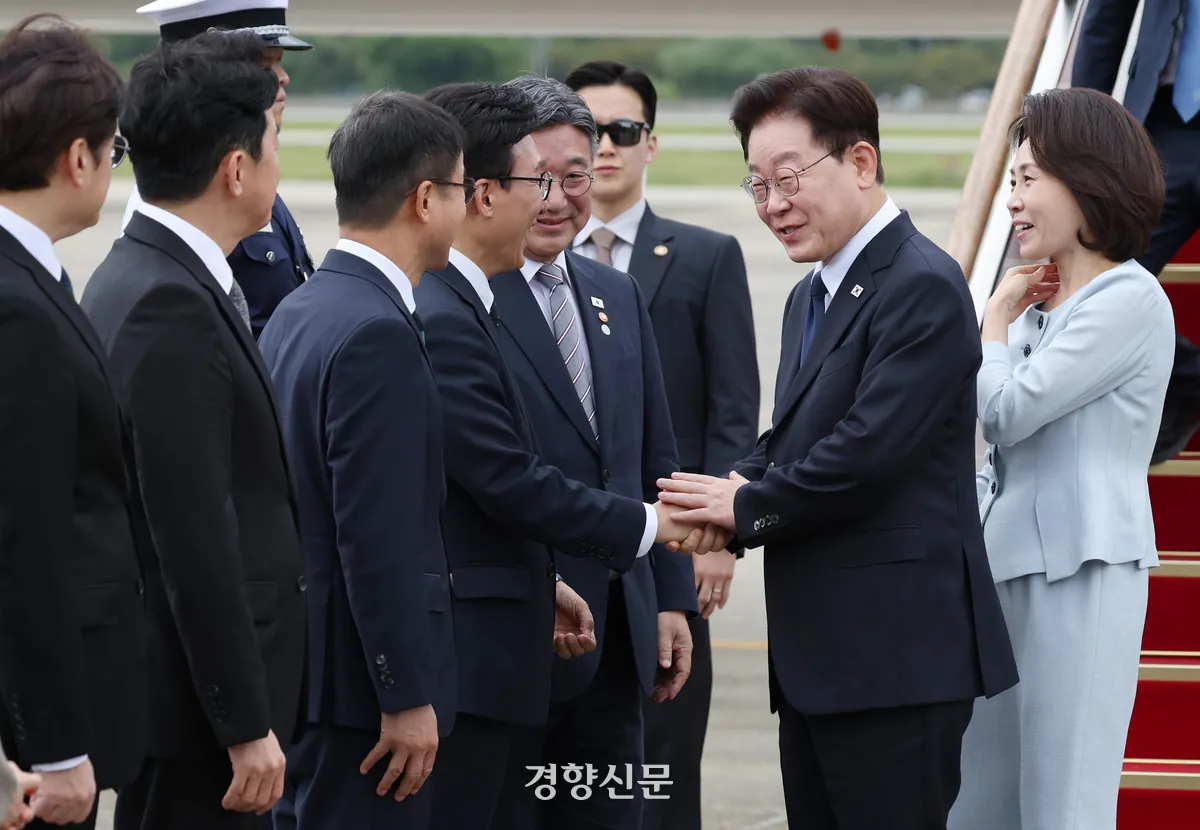
President Lee Jae Myung returned to Seoul on September 10, 2026 after a state visit to France. While meeting with Korean expatriates in Paris on September 9, he said: “My term is clearly limited by the Constitution.” This was his first on-record comment since a consecutive-term controversy erupted in July 2026, when National Assembly Speaker Cho Jung-sik — a former senior adviser to President Lee — publicly suggested that allowing an incumbent president to serve consecutive terms was “a matter of public opinion and choice by the sovereign people.” A presidential aide, Senior Secretary Seong Gi-hong, followed up on September 10 by telling broadcasters that the president’s words meant consecutive terms are “entirely impossible and cannot even be considered.” Critics and the press note that a statement requiring aide clarification is by definition ambiguous. A National Barometer Survey (NBS) released in late August 2026 found that 63% of respondents want President Lee to explicitly pledge he will not run again if any constitutional amendment passes.
Why Korea does it this way
South Korea’s constitution (amended in 1987 after decades of authoritarian rule) limits the president to a single five-year term with no possibility of re-election. The one-term limit was a deliberate safeguard against the concentration of power seen under earlier presidents. Because the president controls significant executive levers — budget proposals, cabinet appointments, and the direction of bodies such as the Ministry of Economy and Finance — any credible threat of term extension triggers unusually strong public and market reactions. The current constitution requires a two-thirds National Assembly vote plus a national referendum to amend; that bar is high, but the debate itself is enough to generate uncertainty.
What it means for you
Households and workers: Political uncertainty typically delays major fiscal decisions. If the term-limit debate absorbs legislative bandwidth through late 2026, budget bills and labor-market reforms sit lower in the queue. No specific measure has been delayed yet — but watch the National Assembly’s legislative calendar for signs of gridlock.
Foreign residents and expats: Visa policy, foreign property rules, and income-tax treaty implementation all require stable executive-legislative relations. Prolonged political controversy tends to push these lower-priority items further out. Nothing has changed today, but the window for reform narrows if the political environment stays charged.
Investors in Korean-listed assets: Government approval ratings — the NBS shows meaningful public discomfort — historically correlate with legislative risk premiums on the Korean Stock Exchange (KRX). No policy has been reversed or announced; this is a political-confidence story, not a rate or earnings story. Check current KOSPI (Korea Composite Stock Price Index) risk indicators at the Korea Exchange (krx.co.kr) for real-time sentiment data.
Bond and currency watchers: A lame-duck dynamic (where a president’s influence weakens as term-end approaches) is already baked into the Korean political calendar. If the amendment debate accelerates that dynamic — or conversely, if a clear public pledge by the president restores confidence — the won and government bond spreads could react. Check the current Bank of Korea policy rate and KRW/USD level at the Bank of Korea (bok.or.kr); this article does not state those figures.
Watch next
- Presidential press conference (date not yet set — to be announced by the Blue House press office): Kyunghyang Shinmun and other outlets are calling for a formal on-camera statement from President Lee ruling out consecutive or multiple terms. A clear pledge would likely defuse the controversy; continued silence or aide-mediated messaging will sustain it.
- National Assembly autumn session legislative agenda (session opens September 2026): If constitutional amendment proposals are formally tabled in committee, that is the trigger for a harder market and policy reaction. Watch for committee registration announcements from the National Assembly (assembly.go.kr).
- Next National Barometer Survey (NBS) release — monthly, next expected in late September 2026: If the president’s approval rating falls further below the current level, pressure for a definitive statement intensifies and fiscal-policy risk rises.
Source: Kyunghyang Shinmun (경향신문)
Was this useful?
What made the difference? Pick one.
What made the difference? Pick one.
Thanks. We read every answer.



