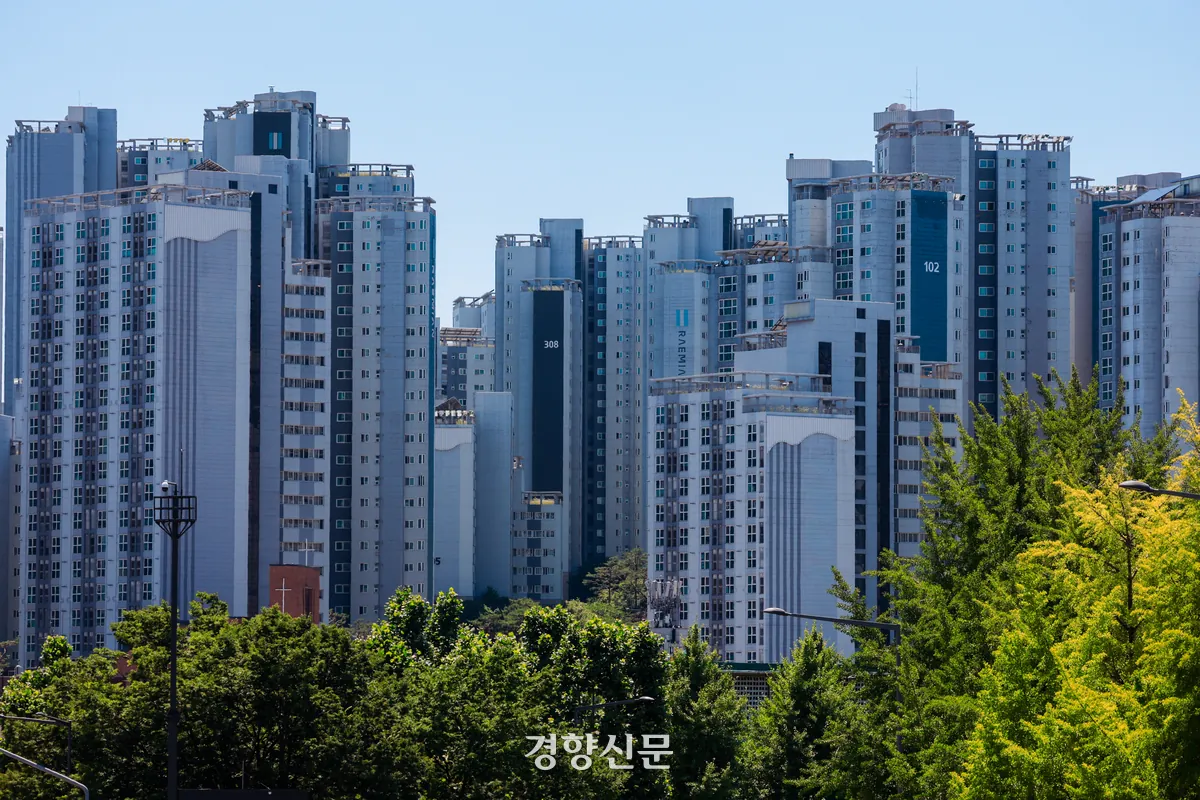
Seoul apartment prices rose for an 83rd consecutive week in early September, but a new tax plan targeting expensive homes is visibly splitting the market: the affluent southern districts are falling while northern Seoul keeps climbing.
What happened
In the first week of September (data as of September 7, 2026), the Korea Real Estate Board (한국부동산원) reported that Seoul apartment sale prices rose an average of 0.20% week-on-week — a streak running since the first week of February 2025. The pace did slow, narrowing by 0.02 percentage points from the prior week.
The clearest signal came from the three Gangnam-area districts, where prices fell after the government announced a tax reform plan tightening the burden on high-priced homes. Gangnam-gu dropped 0.35% and Seocho-gu fell 0.30% — each for a fifth consecutive week. Songpa-gu, which had been rising since late April, slipped 0.02%, its first decline since the third week of April.
Northern Seoul moved in the opposite direction. Gangbuk-gu led gains at +0.46%, followed by Dobong-gu and Seodaemun-gu (both +0.43%), Seongbuk-gu (+0.42%), Gwanak-gu (+0.41%), and Jungnang-gu (+0.40%). The Korea Real Estate Board noted that prices rose mainly in large-scale developments and complexes near subway stations. Gyeonggi Province (the wider Seoul metro belt) rose 0.17%, with Seongnam-Bundang slowing from 0.53% to 0.41%. Nationwide, prices averaged +0.08%.
Why Korea does it this way
Korea has long used property taxes and capital-gains surcharges as a lever to cool speculative buying, particularly in the Gangnam belt — a cluster of three southern Seoul districts (Gangnam, Seocho, Songpa) that function as the country’s prestige real estate market. When the government signals heavier taxation on homes above certain price thresholds, sellers in those districts often lower asking prices or pull listings, while buyers shift attention to relatively cheaper northern Seoul neighborhoods where the tax impact is smaller. This push-pull between policy announcements and district-level price data is a standard feature of the Seoul market cycle.
Jeonse (a large lump-sum deposit paid by a tenant instead of monthly rent, returned in full at the end of the lease) is the dominant rental structure in Korea. Jeonse rents track sale prices with a lag: when buyers move to the sidelines, demand for jeonse contracts rises, pushing deposits higher.
What it means for you
Buyers and sellers in Gangnam-area districts: Five straight weeks of price falls in Gangnam-gu and Seocho-gu suggest that sellers are accepting lower bids. The pending tax reform — not yet fully enacted — is the immediate driver; the precise rate thresholds will be confirmed once legislation passes (check the Ministry of Economy and Finance for current figures).
Renters on jeonse contracts: Seoul jeonse deposits rose 0.19% in the same week, with Nowon-gu up 0.38% and Jungnang-gu up 0.37%. A 0.19% weekly rise compounds quickly: on a 500-million-won (approx. US $370,000) jeonse deposit, that week’s move alone equals roughly 950,000 won in notional deposit value. Tenants renewing contracts in northern Seoul should expect landlords to push for higher deposits.
Northern Seoul residents and buyers: The uptrend is still intact but narrowing. Large complexes near subway stations remain the price leaders — proximity to transit continues to command a premium.
Investors tracking Korean real-estate-linked assets: The market split — Gangnam weakening, northern districts strengthening — reflects a policy-driven rotation rather than a broad correction. No investment advice; verify listed-company exposure independently.
Watch next
- The Korea Real Estate Board publishes weekly apartment price data every Wednesday. The second-week-of-September release (expected around September 17, 2026) will show whether Songpa-gu’s first dip deepens or reverses.
- The government’s tax reform bill targeting high-priced homes has not yet passed the National Assembly. Watch for a legislative schedule announcement from the Ministry of Economy and Finance — the bill’s passage (or failure) is the trigger that will determine whether Gangnam-area sellers capitulate further or recover.
- If nationwide weekly prices slip below 0.05% for two consecutive readings, analysts typically flag a broader cooling trend — the current 0.08% national figure is the metric to watch.
Source: The Kyunghyang Shinmun (경향신문)
Was this useful?
What made the difference? Pick one.
What made the difference? Pick one.
Thanks. We read every answer.